Finding good freight is one of the biggest challenges for truckers in Texas. A load may look profitable at first, but after fuel, empty miles, tolls, and waiting time, the actual earnings can be much lower than expected. For owner-operators and small fleet owners, choosing the right loads can make a real difference in weekly revenue.
Texas offers many freight opportunities because of its large economy, distribution centers, manufacturing facilities, and connections to other states and Mexico. However, having plenty of freight moving through the state does not mean every load is worth accepting.
The key is knowing where to look, how to compare load offers, and when to negotiate or walk away. With a clear freight strategy, Texas truckers can spend less time chasing loads and make better decisions for their businesses.
Understand the Texas Freight Market
Before searching for loads, it helps to understand how freight moves across Texas. Different cities and regions support different industries, and freight availability can vary depending on the type of truck you operate.
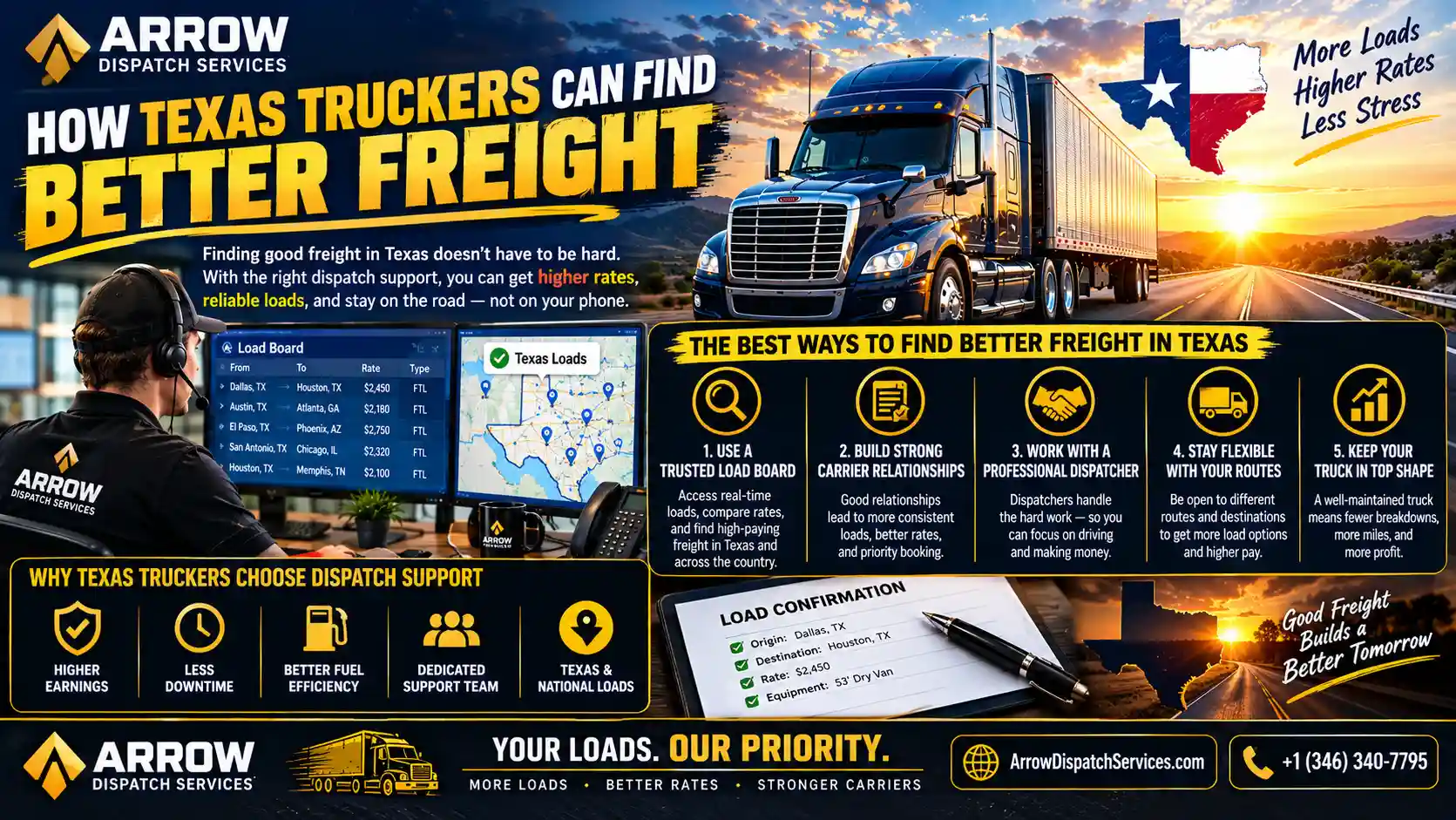
Dallas–Fort Worth is a major distribution and logistics center, with freight connected to retail, warehousing, and manufacturing. Houston has significant activity related to ports, energy, industrial products, and international trade. San Antonio and Austin serve a mix of commercial, retail, and manufacturing needs, while El Paso plays an important role in cross-border transportation.
These markets can offer opportunities for different equipment types, but rates and load availability change regularly.
For example, a dry van carrier may find suitable freight around distribution centers, while a flatbed carrier may focus on construction materials, steel, or industrial equipment. Reefer carriers need to look for temperature-controlled freight that matches their equipment and operating requirements.
Instead of assuming one city always offers the best rates, compare available loads, destination options, and total trip costs before making a decision.
Use Load Boards the Right Way
Load boards are a common starting point for finding available freight. They allow carriers to review load offers, pickup and delivery locations, rates, mileage, equipment requirements, and other details.
However, searching load boards without a plan can waste time. The goal is not to find the largest number of loads. It is to identify loads that fit your truck, schedule, operating costs, and preferred freight lanes.
When reviewing a load, pay attention to:
- Pickup and delivery locations: Check whether the route fits your current location and next destination.
- Total mileage: Include empty miles needed to reach the pickup point.
- Rate per mile: Calculate the rate using total trip miles, not only loaded miles.
- Appointment times: Make sure the pickup and delivery schedules are realistic.
- Equipment requirements: Confirm that your truck and trailer meet the shipper’s needs.
- Broker details: Review the broker’s payment terms and available reliability information.
Do not accept a load simply because it pays more than the last one. A lower-paying load with fewer empty miles and a better delivery location may offer stronger overall value.
Calculate the Real Value of Every Load
One of the most common mistakes truckers make is judging a load by its gross payment alone. The amount a broker offers does not show how much money the carrier will keep after expenses.
Consider this example.
A load pays $2,000 for 500 loaded miles, but the truck must travel another 150 miles without freight to reach the pickup location. The total trip distance is 650 miles, making the gross rate approximately $3.08 per total mile.
Now consider another load paying $1,800 for 500 loaded miles, with only 25 empty miles. The total distance is 525 miles, producing a gross rate of approximately $3.43 per total mile.
The second load pays less overall but has a higher gross rate per total mile. Actual profitability still depends on fuel, maintenance, insurance, tolls, driver costs, waiting time, and other expenses.
Before accepting freight, calculate the complete trip and estimate the costs involved. This makes it easier to compare loads fairly and avoid chasing revenue that does not translate into profit.
Reduce Empty Miles Between Loads
Empty miles can quietly reduce a carrier’s earnings. A truck still uses fuel and adds wear to its tires and equipment when traveling without paying freight.
Texas truckers can reduce empty miles by planning the next load before completing the current delivery. This gives them more time to compare options near the destination rather than searching for freight after the truck is already empty.
For example, if you are delivering in Houston, begin reviewing potential outbound loads before arrival. Compare freight leaving the area with loads available in nearby markets, while considering how far you would need to travel to collect them.
A few extra empty miles may be reasonable if the next load offers a strong rate or takes you toward a preferred market. The important point is to understand why you are driving those miles and whether the next load justifies them.
Keep track of your empty-mile percentage over time. If it regularly increases, review your freight lanes, load selection, and timing to identify where the problem starts.
Build Relationships With Reliable Freight Brokers
Load boards can help you find freight, but dependable broker relationships may make the booking process more efficient.
When working with a broker, communicate clearly, arrive on time, provide required updates, and submit delivery documents promptly. Professional service can help establish trust and make future transactions easier.
Keep records of brokers you work with, including their payment terms, communication quality, and how they handle problems. This information can help you decide which business relationships are worth maintaining.
Before booking a load, review the broker’s credentials and payment practices. Confirm the agreed rate, pickup and delivery details, detention terms, and other important conditions in writing.
Do not assume that every load from a familiar broker is automatically a good deal. Continue evaluating the rate, route, and operating costs. A strong business relationship should support good decisions, not replace them.
Negotiate Better Freight Rates
Many load offers are open to discussion, although the amount of flexibility depends on market conditions and the broker’s needs.
Before negotiating, calculate your minimum acceptable rate. Consider fuel, maintenance, insurance, driver expenses, empty miles, and the time needed to complete the load. You should also account for the next freight opportunity after delivery.
When speaking with a broker, be professional and specific. Explain your rate based on the mileage, schedule, route, or special requirements. If the offer does not cover your costs, ask whether the broker has room to improve it.
Negotiation is not just about asking for more money. It is about understanding the load and making a reasonable business decision.
If the broker cannot meet your minimum rate, be prepared to decline the load. Accepting unprofitable freight simply to keep the truck moving can create bigger financial problems later.
Choose Freight Lanes Based on More Than Pickup Rates
A freight lane is a regular route between locations. Some carriers prefer lanes they know well because they understand the typical travel time, fuel needs, and freight opportunities along the way.
Texas truckers should evaluate both the pickup and delivery markets when selecting loads. A high-paying load may take the truck to an area with limited outbound freight, requiring substantial empty miles to reach the next opportunity.
A slightly lower-paying load may deliver closer to a strong freight market or a location that fits your return route.
For example, a carrier moving freight from Dallas to another state should consider what loads may be available near the destination before accepting the trip. The return journey can affect the overall value of the original load.
There is no single best lane for every carrier. Your equipment, schedule, customer relationships, and operating costs all influence which routes make sense.
Look for Direct Shipper Opportunities
Freight brokers are an important source of loads, but some carriers may also benefit from working directly with shippers.
Direct shipper relationships can provide opportunities for repeat business, scheduled freight, or more predictable transportation arrangements. However, finding and maintaining these relationships takes time.
Start by identifying businesses whose freight matches your equipment and service area. Depending on your operation, these may include manufacturers, wholesalers, distributors, construction suppliers, or other companies that regularly ship goods.
Prepare basic business information, including your equipment details, operating areas, insurance information, and relevant qualifications. Contact potential customers professionally and ask about their carrier onboarding process.
Direct freight is not automatically more profitable. Shippers may have specific requirements, payment terms, service expectations, and onboarding procedures. Evaluate each opportunity carefully before committing your truck or fleet.
Use the Right Strategy for Your Equipment
Different types of trucks need different freight-search strategies. A load that works for one carrier may not be suitable for another.
Dry Van Carriers
Dry van carriers can look for general freight from distribution centers, manufacturers, wholesalers, and retail supply chains. Compare route mileage, loading requirements, appointment times, and the likelihood of finding another load near the delivery location.
Reefer Carriers
Refrigerated carriers should confirm temperature requirements, loading schedules, commodity details, and delivery appointments. Waiting time and equipment demands can affect profitability, so these details should be reviewed before accepting freight.
Flatbed and Step Deck Carriers
Flatbed and step deck loads may involve construction materials, steel, machinery, and industrial products. Confirm dimensions, weight, securement needs, permits where applicable, and whether the offered rate accounts for the work involved.
Hotshot and Power-Only Carriers
Hotshot carriers often need loads that match their truck and trailer capacity, while power-only carriers must confirm trailer arrangements and compatibility. Check load dimensions, weight, pickup procedures, and delivery requirements before booking.
The more closely a load matches your equipment and operating plan, the easier it is to evaluate whether it is a sensible choice.
Plan Ahead Instead of Waiting Until Delivery
Waiting until a delivery is complete to search for the next load can leave you with fewer options. When time is limited, you may feel pressured to accept a weak rate or travel a long distance without freight.
Try to begin searching for the next load while the current trip is still underway. Review likely delivery times, available freight near the destination, and possible return routes.
Leave room for unexpected delays. Traffic, weather, loading problems, and changes to appointment times can affect your schedule. A realistic plan should account for these possibilities instead of assuming every trip will run exactly as expected.
Keep the driver informed about confirmed pickup details and any changes. Good planning helps reduce confusion and gives you more control over the next booking decision.
Track Your Freight Performance
Finding better freight becomes easier when you understand what is working and what is costing you money.
Review your results regularly using a few basic measurements:
- Gross revenue per total mile.
- Empty miles as a percentage of total miles.
- Fuel and other operating costs.
- Time spent waiting at pickup and delivery locations.
- Revenue and expenses by route or freight lane.
- Frequency of canceled loads and scheduling problems.
These numbers can reveal patterns that are easy to miss when focusing on individual loads. For example, a lane that appears profitable based on gross revenue may perform poorly after return miles and waiting time are included.
Use the information to adjust your booking strategy. You may decide to avoid certain destinations, negotiate higher rates for difficult trips, or spend more time developing relationships in stronger markets.
How a Truck Dispatch Service Can Help Texas Truckers Find Better Freight
Managing load boards, negotiating rates, communicating with brokers, and tracking paperwork can take a significant amount of time. For owner-operators and small fleets, handling every task alone may make it harder to focus on driving and business operations.
A truck dispatch service can assist with searching for suitable loads, reviewing freight options, coordinating pickup and delivery details, and managing broker communication. Depending on the agreement, a dispatcher may also help plan return freight and organize rate confirmations and delivery documents.
For Texas carriers, local market knowledge and an understanding of preferred freight lanes can be useful when comparing load options. However, no dispatcher can guarantee consistent freight, high rates, or a specific level of profit.
Before hiring a dispatch company, review its fees, contract terms, services, and load-approval process. Make sure you understand who has the final say on accepting freight and how the company handles delays or canceled loads.
The right dispatch arrangement should support your business decisions and help you manage your workload without taking away control of your operation.
Final Thoughts
Finding better freight in Texas is about making informed decisions, not simply booking the highest-paying load available. Truckers need to consider total mileage, operating expenses, delivery locations, broker reliability, and the chances of finding the next load.
Using load boards strategically, negotiating rates, building reliable business relationships, and planning ahead can help owner-operators and small fleets improve their freight decisions. Tracking empty miles and reviewing actual costs can also show which routes and loads are worth pursuing.
If searching for freight takes too much time, professional dispatch support may be worth considering. The goal is to find loads that fit your equipment, schedule, and business needs while protecting the money you earn on every trip.
Frequently Asked Questions
1. How can Texas truckers find better freight loads?
Texas truckers can find better freight by using load boards strategically, building relationships with reliable freight brokers, negotiating rates, and searching for return loads before completing deliveries. Comparing total mileage, operating costs, and delivery locations can help carriers choose loads that make better financial sense.
2. What are the best load boards for Texas truckers?
The best load board depends on your equipment, preferred routes, and business needs. Truckers can compare platforms such as DAT, Truckstop, and 123Loadboard to review available freight, rates, and pickup and delivery details. Before paying for a subscription, check the platform’s features, pricing, and suitability for your operation.
3. How can owner-operators in Texas find higher-paying loads?
Owner-operators can improve their chances of finding higher-paying loads by researching freight market conditions, negotiating with brokers, reducing empty miles, and choosing routes carefully. They should also calculate fuel, maintenance, insurance, and other operating costs before accepting a load instead of judging it by the gross rate alone.
4. Which Texas cities offer freight opportunities for truckers?
Dallas–Fort Worth, Houston, San Antonio, Austin, and El Paso are important freight markets in Texas. Opportunities vary by equipment type, industry, season, and current demand. Truckers should compare available loads and outbound freight options rather than assuming one city always offers the best rates.
5. How can Texas truckers reduce empty miles?
Truckers can reduce empty miles by planning their next load before delivery, checking return freight, and comparing loads near their destination. They should also consider whether a load’s delivery location offers suitable opportunities for the next trip. Tracking empty miles over time can help identify routes that need improvement.
6. Is it better to use a freight broker or find direct shipper loads?
Both options can work for Texas carriers. Freight brokers provide access to available loads and help connect carriers with shippers. Direct shipper relationships may offer repeat business or more predictable freight, but they often require time, customer outreach, and onboarding. Carriers should compare rates, payment terms, requirements, and consistency before choosing an option.
7. How should truckers calculate the actual value of a freight load?
Truckers should divide the gross load payment by the total trip miles, including empty miles needed to reach pickup. They should then account for fuel, maintenance, insurance, tolls, driver expenses, and waiting time to estimate profitability. A higher gross rate does not always mean a more profitable trip.
8. Can a truck dispatch service help Texas carriers find better freight?
Yes. A truck dispatch service can help search for loads, communicate with brokers, negotiate rates, review load details, and coordinate schedules. Depending on the agreement, a dispatcher may also help identify return freight and organize paperwork. Results depend on market conditions, load availability, and the quality of the dispatch service.
9. How can Texas truckers negotiate better freight rates?
Before contacting a broker, calculate your operating costs and minimum acceptable rate. Consider the total mileage, pickup and delivery schedules, empty miles, and freight market conditions. Explain your rate request professionally and ask whether the broker has room to improve the offer. If the rate does not meet your business requirements, consider declining the load.
10. What should Texas carriers check before accepting a load?
Before accepting a load, review the rate, total mileage, pickup and delivery appointments, equipment requirements, commodity details, broker terms, and accessorial charges. Make sure the rate confirmation reflects the agreed terms and that the trip fits your schedule and operating costs.
11. How can small trucking fleets find consistent freight in Texas?
Small fleets can improve their freight planning by developing relationships with reliable brokers, identifying suitable lanes, tracking load performance, and searching for the next load in advance. A dispatch service may also help coordinate bookings and broker communication across multiple trucks.
12. How can Dexter Dispatch Services help Texas truckers find better freight?
Dexter Dispatch Services helps owner-operators and carriers with load searching, broker communication, rate negotiations, route planning, and dispatch paperwork, depending on their service agreement. Texas carriers can call 682-382-4261 to discuss their equipment, preferred freight lanes, and dispatch needs.