Running a dry van trucking business in Texas involves more than picking up freight and delivering it on time. Owner-operators and small fleet owners must find suitable loads, negotiate rates, communicate with brokers, manage paperwork, and plan their next trips. When you handle all these tasks yourself, finding profitable freight can take time away from driving and managing your business.
This is where dry van dispatch services in Texas can help. A professional dispatcher assists with load searching, rate negotiations, broker communication, and dispatch paperwork so you can focus on keeping your truck moving and managing operating costs.
Texas offers freight opportunities across industries such as retail, manufacturing, food packaging, and distribution. However, finding the right load at the right time still requires planning. Understanding how dry van dispatching works can help you decide whether professional dispatch support makes sense for your trucking business.
What Are Dry Van Dispatch Services?
Dry van dispatch services help trucking companies and owner-operators find and manage freight transported in enclosed trailers. Dry vans are commonly used to haul packaged goods, household products, electronics, building supplies, and other cargo that does not require specialized temperature control.
A dispatcher searches for available loads, reviews shipment details, communicates with freight brokers, negotiates rates, and helps coordinate pickup and delivery schedules. Depending on the agreement, dispatch support may also include rate confirmations, paperwork, and delivery follow-ups.
For example, an owner-operator based in Dallas may deliver a load to Houston and need another shipment before returning to Dallas. A dispatcher can search for available freight in the Houston area and compare options based on the carrier’s preferred routes, schedule, and revenue goals.
The purpose is not simply to book another load. It is to help the carrier make informed decisions about freight, mileage, and operating expenses.
Why Texas Truckers Need Dry Van Dispatch Services
Texas has a large transportation network connecting distribution centers, manufacturing facilities, warehouses, and major cities. This creates opportunities for dry van carriers, but freight availability and rates can vary from one location to another.
Professional dispatch support can help address several common challenges.
1. Finding Consistent Freight
Searching for loads every day can become time-consuming, especially for owner-operators who manage their own business operations. Freight availability may change depending on the season, location, equipment, and current market conditions.
A dry van dispatcher searches for loads that match your truck’s location and availability. This can reduce the time spent checking load boards and contacting brokers individually.
2. Negotiating Competitive Rates
A load’s gross rate does not tell you how profitable the trip will be. Fuel expenses, deadhead miles, tolls, and other operating costs all affect the final result.
A dispatcher can communicate with brokers to negotiate rates and review load details before you accept an offer. Better rates are not guaranteed, but careful evaluation can help you avoid freight that does not make financial sense.
3. Reducing Empty Miles
Empty miles occur when your truck travels without paid freight. These miles increase fuel consumption and vehicle wear without generating load revenue.
For instance, if you deliver a shipment in San Antonio, your dispatcher may search for suitable outbound freight before you leave the area. Finding a load that fits your schedule can reduce unnecessary empty travel.
However, the best option depends on available freight, pickup times, destination, and the rate offered.
4. Saving Time on Paperwork
Dry van trucking involves rate confirmations, bills of lading, proof of delivery, and other shipment-related documents. Missing information or delayed paperwork can create unnecessary problems.
A dispatcher can help organize these documents and communicate with brokers about outstanding requirements. This support allows drivers and fleet owners to spend less time managing administrative tasks.
How Dry Van Dispatch Services Work
The process usually begins with understanding your trucking business and ends with coordinating the load through delivery.
Step 1: Understanding Your Requirements
Your dispatcher needs to know your equipment type, current location, operating authority, preferred routes, availability, and business goals.
For example, a carrier operating from Houston may prefer regional loads, while another carrier based in Dallas may be comfortable with long-haul routes across multiple states.
Clear preferences help the dispatcher identify more suitable opportunities.
Step 2: Searching for Available Loads
The dispatcher reviews available freight through load boards, broker relationships, and other appropriate sources. They compare the shipment’s pickup location, destination, mileage, weight, rate, and delivery schedule.
Not every available load will be a good fit. The goal is to find freight that matches your equipment and operating requirements.
Step 3: Negotiating With Brokers
Once a suitable load is identified, the dispatcher can contact the broker to discuss the rate and shipment terms.
Before accepting, make sure you understand the total mileage, pickup and delivery appointments, commodity, weight, and any special instructions. You should also consider how the load fits your next trip.
Step 4: Reviewing the Rate Confirmation
After the rate and terms are agreed upon, the relevant details should be documented in the rate confirmation.
Review the agreed payment, addresses, appointment times, and any additional requirements before proceeding. Ask questions if the information is incomplete or unclear.
Step 5: Coordinating Delivery
During the trip, the dispatcher may help communicate shipment updates, coordinate schedule changes, and manage paperwork.
After delivery, the carrier typically submits the required proof of delivery and other documents according to the broker’s instructions. Keeping these records organized helps avoid unnecessary delays in the payment process.
Best Texas Cities for Dry Van Trucking
Texas has several major freight markets, each with different transportation opportunities. The most suitable location for your business depends on available loads, your preferred lanes, and the cost of reaching pickup locations.

Houston
Houston’s port-related activity, distribution facilities, and industrial businesses support a wide range of freight movements. Dry van carriers may find opportunities involving packaged goods, retail products, and industrial supplies.

Dallas–Fort Worth
The Dallas–Fort Worth area is a major distribution and transportation hub. Its warehouses, retail networks, and regional connections can provide dry van freight opportunities for local and long-haul carriers.

San Antonio
San Antonio connects freight moving through South Texas with other regional markets. Carriers can evaluate loads serving distribution facilities, commercial businesses, and routes connecting nearby cities.

Austin
Austin’s growing commercial market creates transportation needs for various business supplies and packaged products. Available freight and backhaul options should be checked before planning a trip around the area.
These cities offer potential freight opportunities, but no location guarantees consistent loads or higher rates. Before choosing a route, compare available shipments, total mileage, pickup timing, and the likelihood of finding another load after delivery.
How to Choose a Reliable Dry Van Dispatch Company in Texas
The right dispatch provider should understand your business, communicate clearly, and help you evaluate loads based on your actual operating needs.
Experience With Dry Van Freight
Choose a company familiar with enclosed-trailer freight, broker communication, load boards, and shipment documentation. A dispatcher who understands dry van operations may be better prepared to identify suitable loads and recognize potential problems.
Transparent Dispatch Fees
Ask how the company charges for its services. Some dispatch providers use a percentage of gross load revenue, while others charge a flat fee or offer another pricing arrangement.
Confirm what the fee covers, when it is due, and whether additional charges apply. Get the terms in writing before starting.
Clear Communication
You should know how to reach your dispatcher and what support is available when schedules change or problems arise.
Ask whether you will have a dedicated dispatcher, how often you can expect updates, and how urgent issues are handled.
Realistic Expectations
Be cautious of dispatch companies that guarantee a specific weekly income or promise high-paying loads on every trip. Freight rates depend on market conditions, equipment, mileage, timing, and other factors.
A reliable provider should explain its process honestly and allow you to make the final decision about accepting loads.
A Written Agreement
Review the contract carefully. Check the dispatch fee, cancellation terms, responsibilities, payment arrangements, and any exclusivity requirements.
Also, understand how the company works with brokers and carriers. Dispatching on behalf of a carrier is not automatically the same as operating as a freight broker; the actual arrangement and activities matter.
How Much Do Dry Van Dispatch Services Cost in Texas?
The cost depends on the provider, services included, and pricing agreement.
Two common pricing models are:
- Percentage-based fee: The dispatcher charges an agreed percentage of the revenue covered by the contract.
- Flat-fee pricing: The carrier pays a fixed amount for the agreed services.
For example, if your truck earns $4,000 in gross revenue on a load and your agreed dispatch fee is 5%, the fee would be $200. The remaining $3,800 is before fuel, maintenance, insurance, truck payments, taxes, and other operating expenses.
This is an example of how the calculation works, not a claim about the standard dispatch fee in Texas.
When comparing providers, look beyond the price. Consider the time saved, quality of communication, suitability of loads, and help with paperwork. A low fee is not necessarily the best value if the service does not meet your needs.
Tips to Improve Your Dry Van Trucking Business
Working with a dispatcher can be more effective when you understand your operating costs and communicate your goals clearly.
- Know your cost per mile. Include fuel, maintenance, insurance, equipment payments, and other expenses when evaluating loads.
- Plan your routes ahead of time. Share your preferred lanes with your dispatcher so they can search for freight that fits your schedule.
- Watch deadhead miles. Consider unpaid travel to the pickup location when comparing load options.
- Check every rate confirmation. Confirm the rate, addresses, appointments, and shipment requirements before accepting the load.
- Track your revenue and expenses. Review loaded miles, empty miles, dispatch fees, and operating costs to understand your actual results.
- Communicate changes early. Let your dispatcher know about delays, equipment problems, and changes to your availability.
These habits help you make better business decisions regardless of whether you dispatch your truck yourself or work with a professional service.
Why Choose Dexter Dispatch Services?
Managing freight searches, broker communication, and paperwork can take valuable time away from running your trucking business. Dexter Dispatch Services provides dispatch support for owner-operators and carriers who want help managing these daily responsibilities.
For dry van operators, the focus should be on finding loads that fit the truck, preferred routes, schedule, and business goals. Dispatch support can also help coordinate shipment details and organize communication throughout the process.
Before getting started, discuss your equipment, preferred lanes, dispatch fees, and service expectations. This helps both sides understand what support is needed and whether the arrangement is suitable for your operation.
The goal is to make load management more organized while helping you make informed decisions about rates, mileage, and operating costs.
Frequently Asked Questions
1. What are dry van dispatch services in Texas?
Dry van dispatch services help owner-operators and trucking companies find suitable enclosed-trailer freight, negotiate rates, communicate with brokers, coordinate load details, and manage dispatch paperwork.
2. Are dry van dispatch services suitable for owner-operators?
Yes. Owner-operators can use dispatch support to reduce time spent searching for loads and handling paperwork. It can be useful for drivers who want to focus more on driving and managing their equipment.
3. How much do dry van dispatchers charge in Texas?
Fees vary by provider and agreement. Common pricing models include a percentage of gross load revenue and a flat fee. Confirm the calculation, included services, and any additional charges before signing an agreement.
4. Can a dry van dispatcher help find better-paying loads?
A dispatcher can search for suitable freight and negotiate with brokers when possible. However, higher rates are not guaranteed, and every load should be evaluated against mileage, fuel expenses, deadhead miles, and other operating costs.
5. Which Texas cities offer dry van freight opportunities?
Houston, Dallas–Fort Worth, San Antonio, and Austin are important commercial and transportation markets. Freight availability varies, so carriers should compare current load options and backhaul opportunities before choosing a route.
6. Can dispatch services help reduce empty miles?
Yes. Dispatchers can search for loads near delivery locations and help plan the next trip. Results depend on freight availability, timing, destination, and the rates offered.
7. What should I look for in a dry van dispatch company?
Look for relevant experience, transparent fees, reliable communication, a clear written agreement, and realistic expectations. Make sure the provider understands your preferred routes and the type of freight you haul.
8. Is a dry van dispatch service worth the cost?
It can be worthwhile if the service saves time, reduces administrative work, and helps you make better load decisions. Compare the cost against the actual value received rather than assuming dispatch support will automatically increase profits.
Conclusion
Dry van dispatch services in Texas can help owner-operators and carriers manage load searches, broker negotiations, shipment coordination, and paperwork. The right provider can make daily operations easier and give you more time to focus on driving and managing your business.
Before choosing a dispatch company, compare its fees, experience, communication, and contract terms. Evaluate loads based on your total operating costs, not just the advertised rate.
Successful dry van trucking is about more than keeping your trailer loaded. It requires careful planning, suitable freight, cost control, and smart decisions about every trip. With the right dispatch support and a clear understanding of your numbers, you can build a more organized and sustainable trucking operation.
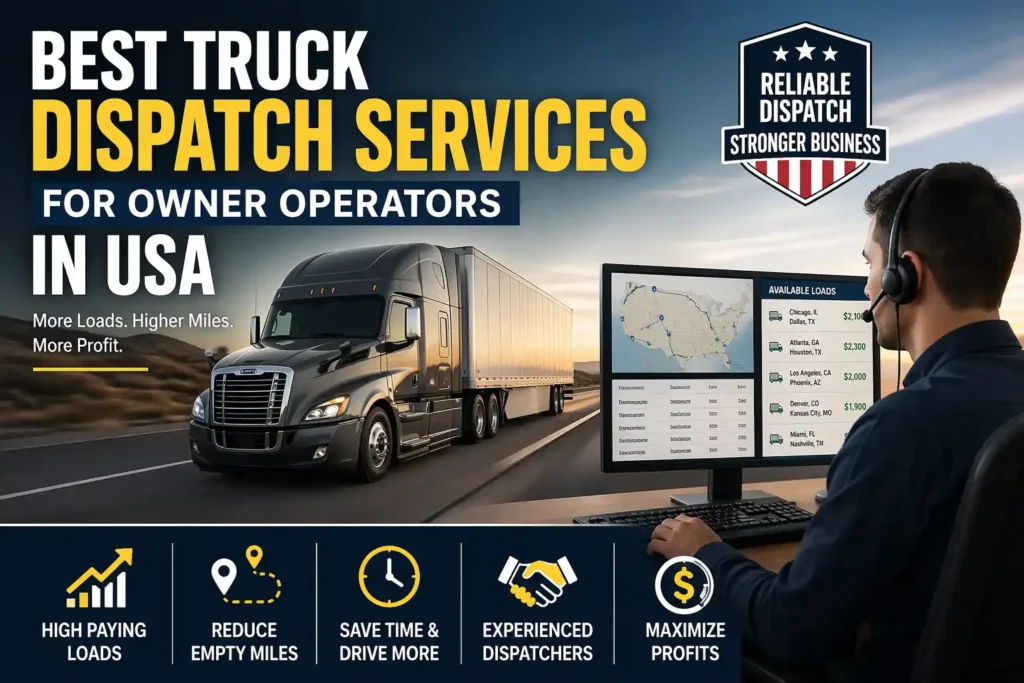
In the case of owner operators in the USA, it is more difficult to find steady and well-compensated loads than the actual driving of the truck. The competition is intense, the brokers are quick, and any good freight will hardly have a lengthy shelf life. Here is where dispatch services are involved. An experienced dispatcher could save some money, lessen dead air miles and enable you to drive more rather than drive all day trying to locate loads.
This guide defines exactly what truck dispatch services are, why they are important to owner operators and how to select the one that fits best in your trucking industry.
What is a truck dispatch service?
A truck dispatch service is a support service that assists truck drivers and owner operators with locating freight loads and securing them. Tasked with searching, negotiating, and making bookings, dispatchers are no longer using hours in load boards.
They have a straightforward occupation:
-
- Find available loads
-
- Contact brokers
-
- Negotiate rates
-
- Freight by truck your books.
-
- Handle basic paperwork
Simply put, they are intermediated, drivers and freight brokers.
Why owner operators need dispatch services
A lot of owner operators begin by thinking that they can do it all on their own. However, in the long run, the majority of them realize that it is a full-time job to find regular loads.
This is the actual use of dispatch services:
Saves time
You do not need to search loads all day, but instead you will be able to focus on driving and deliveries.
Better load access
Direct broker connections are often not available publicly on load boards and can only be provided by dispatchers.
Higher earning potential
An experienced dispatcher will think of how to get better freight rates.
Reduced empty miles
Fractionate dispatching makes you get backloads and limits deadhead movements.
Consistent work
Rather than random loads, you have more stable weekly routes.
What makes a good dispatch service?
Dispatch services are not all alike. Some are professional, seasoned, and others are mere novice load finders.
In a good dispatch service, we should find:
-
- Strong broker network
-
- Freight experience in various kinds.
-
- Clear communication
-
- Transparent pricing
-
- Skill in locating well-paying loads.
-
- Fixed assistance for your type of truck.
When a dispatcher cannot regularly supply loads, then what is the point?
Types of dispatch services for owner operators
This is because various trucks demand varying forms of dispatch support.
Box truck dispatching services.
Purposely used in Amazon relay and local freight, focused on local and regional delivery loads.
Flatbed dispatch services
Specializes in heavy and oversized freight like construction materials and equipment.
Hotshot dispatch services.
Pickup trucks with trailers are used to load fast delivery loads, which may be time-sensitive freight.
Reefer dispatch services
During the transportation of products under a certain temperature (food and pharmaceuticals).
Dry van dispatch service.
One of the most prevalent ones is transporting general freight interstate.
How dispatch services help increase profits
A good dispatching service is not one that simply locates loads. It has a direct effect on your income.
They help by:
-
- Finding higher-paying lanes
-
- Avoiding low-rate brokers
-
- Planning efficient routes
-
- Reducing fuel waste
-
- Booking backhaul loads
A single percent change in rate per mile can result in a huge rise in monthly earnings.
Common mistakes owner operators make
Too many drivers can not work not due to the absence of work, but due to the miscalculations:
-
- Taking low loads too readily.
-
- Collaborations with inexperienced dispatchers.
-
- Using a single source of load.
-
- Failure to plan the return trips.
-
- Not considering fuel and route efficiency.
These are some of the mistakes that should be avoided to contribute significantly to profitability.
How to choose the best truck dispatch service in USA
Check: Before working with any dispatch company, examine:
Experience
The length of time that they have been in the trucking industry.
Load network
The existence of strong relationships with brokers and shippers.
Transparency
Proper definition of fees and commission system.
Communication
Quick reaction and adequate movement updates on loads.
Results
Potential to supply regular and lucrative loads.
Conclusion
A good dispatch service is more than a support tool to owner operators in the USA: it can be a business partner. It not only curbs downtime but also improves the quality of loads and overall profits.
The thing, though, is selecting the appropriate dispatcher. One feeble service will cost you time, and a good one will always get your truck going and make you a profit.
Assuming that you want consistent traffic and improved revenues, then one of the most efficient dosses that you can take in the trucking sector is to engage a solid dispatch service.