Experienced carriers already know how trucking works. They understand freight lanes, load boards, brokers, fuel costs, driver schedules, and the challenges that come with keeping a truck moving. But experience does not mean every task needs to be handled personally.
As a carrier grows, the amount of work behind each load can become difficult to manage. Finding freight, calling brokers, negotiating rates, checking load details, tracking shipments, handling paperwork, and planning the next move can take hours every day.
This is where professional dispatch services can provide value.
For experienced carriers, dispatch support is usually less about learning the basics and more about improving efficiency. A good dispatcher can take care of time-consuming freight tasks while helping the carrier make better decisions about loads, lanes, schedules, and revenue.
What Are Dispatch Services for Experienced Carriers?
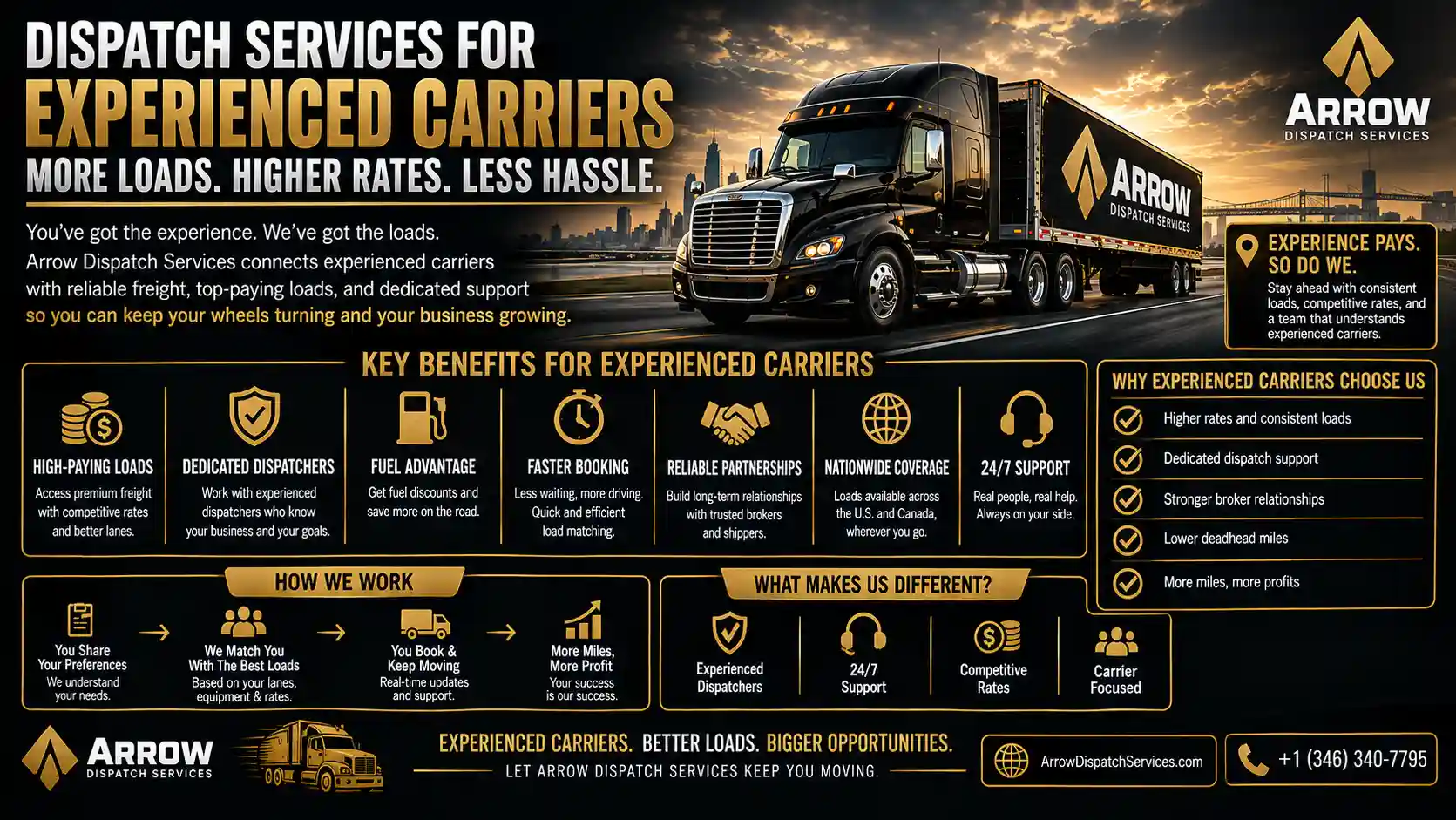
Dispatch services provide freight management and administrative support to trucking carriers. The dispatcher typically works with the carrier to find suitable loads, communicate with brokers, negotiate rates, coordinate appointments, and manage load-related information.
Experienced carriers may already have strong industry knowledge, but dispatch support can still reduce the amount of time spent on daily freight administration.
The carrier remains in control of important business decisions. The dispatcher provides support and handles agreed-upon tasks on the carrier’s behalf.
The exact services vary by company, but common responsibilities include:
- Load searching and planning
- Freight booking
- Broker communication
- Rate negotiation
- Pickup and delivery coordination
- Load tracking
- Rate confirmation review
- Detention communication
- Documentation support
- Reload planning
- Lane analysis
Why Experienced Carriers Use Dispatch Services
A carrier with years of experience may know exactly how to find a load. The bigger question is whether they have enough time to do everything themselves.
As a business becomes busier, administrative work can take attention away from other important responsibilities.
An owner-operator may need to focus on driving, maintenance, accounting, compliance, and customer relationships. A fleet owner may need to manage drivers, equipment, payroll, maintenance, and overall operations.
Professional dispatch support can take some of the freight-related workload off their plate.
The benefit is not necessarily that the dispatcher knows more about trucking than the carrier. The benefit is that the dispatcher can dedicate time to freight management while the carrier focuses on running the business.
Better Freight Planning
Experienced carriers understand that a good load is about more than the gross rate.
A load paying $3,000 is not automatically better than one paying $2,500. Mileage, deadhead, fuel costs, appointment times, destination, and reload opportunities all affect the actual value of a load.
A professional dispatcher looks at the entire trip.
For example, a slightly lower-paying load may make more sense if it has minimal deadhead and delivers into a strong freight market. A higher-paying load may be less attractive if it requires a long empty drive and leaves the truck in a difficult area.
This type of planning can help carriers make decisions based on overall profitability rather than headline rates.
Rate Negotiation for Experienced Carriers
Experienced carriers usually have an understanding of freight rates, but negotiating every load still takes time.
A dispatcher can communicate with brokers, ask relevant questions, present rate expectations, and negotiate on behalf of the carrier.
Strong negotiation requires more than simply asking for a higher rate. The dispatcher should understand the lane, mileage, equipment, appointment requirements, market conditions, and carrier’s operating costs.
Professional communication is also important. A carrier may work with the same brokers repeatedly, so protecting those relationships matters.
Reducing Unnecessary Deadhead
Empty miles directly affect trucking profitability because the truck is moving without generating freight revenue.
Dispatch services can help reduce unnecessary deadhead by considering the truck’s current location and planning the next load before the current trip is finished.
This does not mean every empty mile can be eliminated. Some deadhead is unavoidable, especially when freight is limited or the carrier needs to reposition the truck.
The objective is to make smarter decisions about when and where the truck moves empty.
Strategic Lane Planning
Experienced carriers often develop preferred lanes based on their equipment, customers, home-time requirements, and knowledge of freight markets.
A dispatcher can use this information when searching for loads.
Instead of treating every available load equally, the dispatcher can focus on freight that fits the carrier’s established operating strategy.
For example, a carrier may prefer certain regional markets or want to avoid areas where reloads are consistently difficult. A dispatcher who understands these preferences can search more efficiently.
Over time, this can create a more consistent freight strategy.
Support With Broker Communication
Broker communication can consume a significant amount of time.
There may be calls about rate confirmations, pickup numbers, appointment changes, tracking updates, detention, layovers, lumper fees, or delivery paperwork.
A dispatcher can handle much of this communication according to the carrier’s instructions.
This is particularly useful when a carrier has multiple trucks. Instead of several drivers or managers communicating with multiple brokers throughout the day, dispatch support can provide a central point of communication for freight-related matters.
Managing Multiple Trucks
Dispatching one truck is different from managing several.
Once a carrier operates a small fleet, load planning becomes more complicated. Each truck has a different location, driver schedule, equipment type, available hours, and delivery commitment.
A dispatcher can help coordinate these moving parts.
The objective is to keep each truck productive without creating unrealistic schedules.
Good fleet dispatching considers the next load, not just the current one. This helps create continuity between pickups and deliveries.
Load Tracking and Updates
Shippers and brokers may need updates about freight during transit.
A dispatcher can help manage tracking requests and communicate relevant information to brokers.
This can reduce the number of interruptions for drivers, particularly when they are operating on long-haul routes.
The dispatcher should also keep accurate records of important load information so that everyone involved has the same understanding of the shipment.
Detention and Layover Management
Waiting time can create problems for carriers.
When a driver spends several hours waiting to load or unload, the delay can affect the rest of the schedule. Depending on the broker’s terms and the circumstances, detention or layover compensation may be available.
A dispatcher can document the situation, communicate with the broker, and submit the required information.
The dispatcher should not make unrealistic promises about accessorial payments. The actual compensation depends on the rate confirmation, broker policies, and specific circumstances of the load.
Dispatch Support for Different Equipment
Experienced carriers may operate different types of equipment, and each requires a different freight strategy.
Dispatch services may support:
- Dry van
- Reefer
- Flatbed
- Step deck
- Power only
- Box truck
- Hotshot
Equipment knowledge matters because freight requirements can vary significantly.
For example, reefer freight may involve temperature requirements and appointment considerations, while flatbed loads can involve securement, dimensions, tarping, and other requirements.
A dispatcher should understand the equipment before booking freight.
Saving Time Without Losing Control
One concern experienced carriers may have is losing control over their freight decisions.
That does not have to happen.
A good dispatch relationship should be based on clear communication. The carrier can establish rules about preferred lanes, minimum rates, equipment, home time, and loads they do not want.
The dispatcher then works within those guidelines.
This allows the carrier to delegate time-consuming tasks without giving up control over the overall business strategy.
What Should Experienced Carriers Look for in a Dispatch Company?
Experience should be one of the first things to evaluate, but it should not be the only factor.
A carrier should look for a dispatcher who understands their equipment, freight type, preferred markets, and business goals.
Important questions to ask include:
- How do you select loads?
- How do you negotiate rates?
- Which equipment types do you handle?
- How do you reduce deadhead?
- How do you manage detention?
- How do you communicate with brokers?
- How often will I receive updates?
- What are your dispatch fees?
- Is there a long-term contract?
- Can I reject a load?
- Who handles after-hours issues?
Clear answers can help determine whether the dispatch service fits the carrier’s operation.
Percentage-Based vs Flat-Rate Dispatch Fees
Dispatch companies commonly use different pricing structures.
Some charge a percentage of the gross revenue from booked freight. Others may use a flat fee or another arrangement.
A percentage-based model can align the dispatcher’s compensation with booked revenue, while a flat fee may provide more predictable costs.
Neither option is automatically right for every carrier.
The carrier should calculate the total cost and compare it with the time saved and value provided by the service.
The agreement should clearly explain the fee, payment terms, included services, and any additional charges.
Signs of a Good Dispatch Relationship
A strong dispatcher-carrier relationship usually has clear communication and realistic expectations.
The dispatcher should understand that the carrier’s goal is profitability, not simply the highest number of loads.
The carrier should also provide accurate information about equipment, availability, preferred lanes, and operating limitations.
Regular communication makes it easier to adjust the freight strategy when market conditions change.
If a dispatcher consistently books loads without considering the carrier’s costs or preferences, that relationship may need to be reconsidered.
Common Mistakes When Hiring Dispatch Services
Experienced carriers can still make mistakes when choosing a dispatch company.
One common mistake is focusing only on the dispatch fee.
A cheaper service is not necessarily better if communication is poor or the dispatcher consistently books unsuitable freight.
Another mistake is accepting unrealistic revenue promises.
Freight markets change. No dispatcher can guarantee a specific weekly income because rates depend on demand, capacity, equipment, location, fuel prices, and other conditions.
Carriers should also avoid agreements they do not fully understand.
Read the contract, ask questions, and make sure the responsibilities of both sides are clear.
How Dispatch Services Can Support Business Growth
As a carrier grows, time becomes increasingly valuable.
An owner-operator who adds another truck may suddenly have twice the freight coordination without having twice the available time.
A small fleet may eventually need dedicated support for load planning and broker communication.
Dispatch services can help create a more organized freight process as the operation grows.
However, dispatch support should be part of a broader business strategy. Carriers should continue tracking revenue, expenses, fuel, maintenance, deadhead, driver performance, and overall profitability.
Final Thoughts
Dispatch services can provide meaningful support even for carriers with years of trucking experience.
The value is not simply in finding loads. A good dispatcher can help with freight planning, rate negotiation, broker communication, load tracking, appointment management, and future load strategy.
For experienced carriers, the right dispatch service should complement the knowledge they already have.
The carrier brings industry experience and business goals. The dispatcher brings time, organization, freight research, and communication support.
When both sides work from the same strategy, dispatch services can help reduce administrative work, improve freight planning, and keep the operation running more efficiently.
FAQs About Dispatch Services for Experienced Carriers
Do experienced owner-operators need dispatch services?
Not necessarily. Experienced carriers can dispatch themselves, but professional dispatch support can save time and help manage freight, broker communication, and load planning.
What does a dispatcher do for an experienced carrier?
A dispatcher may find loads, negotiate rates, communicate with brokers, coordinate appointments, track shipments, manage paperwork, and plan future freight.
Can dispatch services help reduce deadhead miles?
They can help by considering the truck’s current location, destination, available freight, and reload opportunities when planning loads. Deadhead cannot always be avoided.
Do dispatchers negotiate better rates?
A skilled dispatcher can negotiate rates based on the load, lane, mileage, equipment, market conditions, and carrier’s requirements. However, no dispatcher can guarantee a specific rate.
Can dispatch services manage multiple trucks?
Yes. Dispatch teams can coordinate freight for small and growing fleets, including load planning, broker communication, tracking, and scheduling across multiple trucks.
How much do dispatch services charge carriers?
Fees vary. Some dispatch companies charge a percentage of gross load revenue, while others use flat fees or different pricing models. The agreement should clearly state all costs.
Can an experienced carrier choose which loads to accept?
Generally, the carrier should establish its load preferences and acceptance rules. A professional dispatcher should work within those guidelines rather than forcing unsuitable freight.
What should I look for in a truck dispatch service?
Look for trucking knowledge, clear communication, transparent pricing, strong negotiation skills, experience with your equipment, realistic expectations, and a dispatch process that fits your business goals.
Are dispatch services useful for small trucking fleets?
Yes. Small fleets can use dispatch support to coordinate multiple trucks, manage freight communication, improve load planning, and reduce the administrative workload on fleet owners.
Can a dispatcher guarantee weekly trucking revenue?
No. Revenue depends on freight rates, truck availability, market demand, equipment, operating costs, and other factors. A trustworthy dispatcher should provide realistic expectations instead of guaranteed income claims.