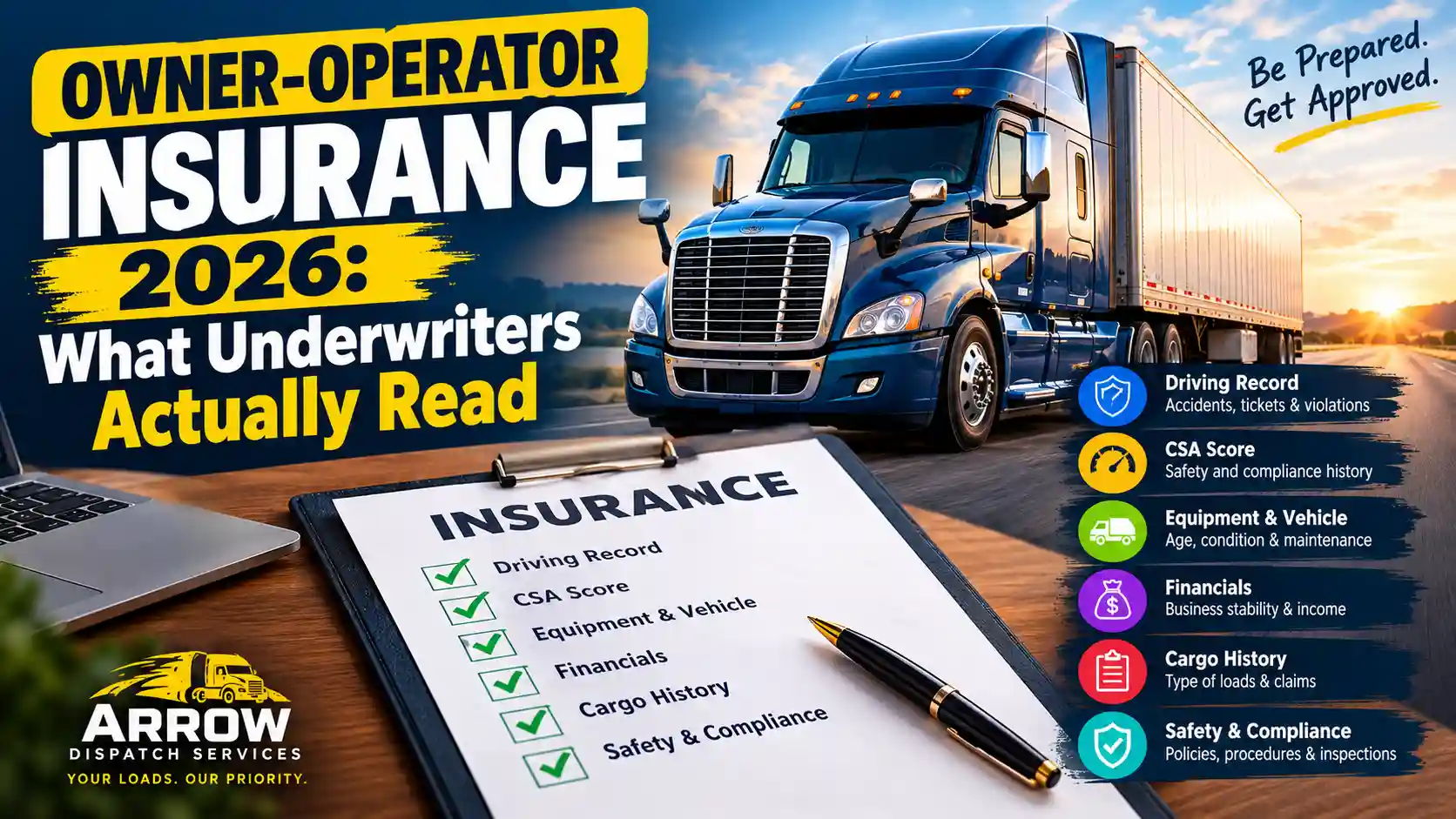
For an owner-operator, getting commercial truck insurance is not simply about finding the lowest premium. Insurance companies look closely at your driving history, equipment, operating experience, business records, cargo, routes, and the type of work you plan to haul.
In 2026, underwriters have more information available when evaluating a trucking business. They are not just looking at a quote form. They are trying to understand how much risk your operation represents and whether your business has the experience and controls needed to manage that risk.
Understanding what underwriters actually review can help you prepare a stronger application, avoid unnecessary delays, and potentially improve your insurance options.
What Is Owner-Operator Insurance?
Owner-operator insurance is commercial insurance designed for truck drivers who operate their own trucking business. The exact coverage depends on how the business is structured, what equipment is used, whether the truck is leased on to a carrier, and what type of freight is hauled.
Common coverage can include:
- Primary liability
- Physical damage
- Motor truck cargo
- General liability
- Bobtail or non-trucking liability
- Trailer coverage
- Medical payments
- Rental reimbursement or downtime coverage
Not every owner-operator needs every type of coverage. The right policy depends on the operation and contractual requirements.
What Underwriters Actually Look At
When you apply for commercial truck insurance, the underwriter’s main job is to assess risk. Several factors can influence that decision.
1. Your Driving History
Your motor vehicle record is one of the first areas an insurance company may review.
Underwriters may look at:
- Accidents
- Moving violations
- Serious traffic offenses
- Recent license issues
- At-fault crashes
- Frequency of incidents
A single old violation does not necessarily tell the whole story. Underwriters often consider how recent an incident was, how serious it was, and whether there is a pattern of unsafe driving.
A clean and stable driving record generally gives an underwriter more confidence in the operation.
2. Commercial Driving Experience
Experience matters because trucking insurance is heavily connected to operational risk.
An underwriter may want to know:
- How long you have held a commercial driver’s license
- How long you have been operating commercial vehicles
- Whether you have experience with the equipment you currently operate
- Whether you have experience with your intended freight
- Whether your previous experience matches your current operation
For a new owner-operator, limited experience can make the insurance process more difficult. This does not mean coverage is impossible, but the insurer may examine the application more carefully.
3. Your FMCSA Safety Record
For many trucking operations, an underwriter can review information connected to your motor carrier operation and safety history.
This may include information related to:
- Inspections
- Crashes
- Out-of-service events
- Safety performance
- Operating history
- Compliance issues
The important point is that underwriters want consistency. If an application presents the business as low-risk but the available operating information suggests otherwise, questions can follow.
4. The Type of Freight You Haul
Not all freight carries the same insurance risk.
Underwriters may ask exactly what you haul rather than accepting a general description such as “general freight.”
For example, the risk profile can differ between:
- General dry freight
- Refrigerated freight
- Auto parts
- Machinery
- Building materials
- Household goods
- Produce
- High-value cargo
- Specialized equipment
The commodity matters because the potential loss, theft exposure, loading requirements, and claims severity can vary significantly.
Be specific and accurate when describing your freight. Trying to make your operation look safer by leaving out certain commodities can create bigger problems later.
5. Your Operating Radius
Where you operate can affect your insurance risk.
An underwriter may want to know whether you run:
- Local routes
- Regional lanes
- Interstate routes
- Long-haul operations
- Specific states or regions
Long-distance operations can introduce different exposure to weather, traffic, road conditions, theft, and accident frequency.
Your actual operating area should match what you report to the insurer.
6. The Age and Type of Your Truck
Your truck is another important part of the underwriting picture.
Information may include:
- Year
- Make and model
- Vehicle type
- Replacement value
- Safety equipment
- Intended use
- Financing or leasing information
Physical damage coverage is particularly connected to the value and condition of the equipment.
A newer truck may have a higher replacement value, while an older truck may have different repair and reliability considerations.
7. How Much You Drive
Annual mileage can help an insurer understand exposure.
A truck covering 40,000 miles a year does not present exactly the same exposure as one traveling 120,000 miles.
Underwriters may consider:
- Estimated annual mileage
- Average trip length
- Number of operating days
- Operating radius
- Frequency of interstate travel
Mileage should be estimated realistically. An inaccurate estimate can create problems if your actual operation looks very different from the information provided during underwriting.
8. Your Loss History
Your previous insurance claims can tell an underwriter a lot about your operation.
They may review:
- Number of claims
- Type of claims
- Claim frequency
- Claim severity
- How recently claims occurred
A business with several recent losses may receive more scrutiny than one with a long history of few or no claims.
This is why preventing small incidents from becoming repeated claims can matter over the long term.
9. Your Business Structure
Underwriters also need to understand who owns and operates the business.
They may review whether you are:
- An independent owner-operator
- Leased to a motor carrier
- Operating under your own authority
- Part of a small fleet
The insurance requirements can vary considerably depending on how your trucking business operates.
For example, an owner-operator leased to a carrier may have certain coverage provided by the motor carrier while still needing separate insurance for other exposures.
10. Your Authority and Operating Status
If you operate under your own authority, insurers may look at your operating status and business information.
This helps them understand whether the business is established, new, active, or changing its operating model.
If you are applying for insurance while starting a new authority, expect questions about your experience, equipment, freight, lanes, and business plan.
A clear application makes the underwriting process easier.
11. Your Safety Practices
Insurance companies are interested in how you manage risk before an accident happens.
An underwriter may want to know whether you have procedures for:
- Driver qualification
- Vehicle inspections
- Preventive maintenance
- Cargo securement
- Hours-of-service compliance
- Accident reporting
- Drug and alcohol compliance
- Driver training
For a one-truck owner-operator, these practices may be less complicated than those of a large fleet, but they still matter.
12. Where the Truck Is Parked
Overnight parking can also be part of the risk assessment.
An insurer may consider where the vehicle is normally stored when it is not operating.
A secure commercial lot, private property, or other controlled location can present a different exposure from frequent unsecured parking.
This factor can become especially relevant for theft and vandalism claims.
Why Accurate Information Matters
One of the biggest mistakes an owner-operator can make is providing information that does not accurately describe the business.
For example, saying you haul only general freight when you regularly transport a higher-risk commodity can create issues when a claim occurs.
The goal should not be to make the operation look perfect. The goal is to give the insurer a clear and accurate picture of the business.
Good underwriting starts with good information.
What Can Make an Insurance Application Look Stronger?
There is no guaranteed formula for getting a lower premium, but owner-operators can improve their overall risk profile by running a well-managed operation.
Helpful factors may include:
- A clean driving history
- Consistent operating experience
- Strong maintenance records
- Good inspection results
- Few or no recent claims
- Accurate business information
- Proper cargo securement
- Reliable safety procedures
- Secure truck parking
- Realistic mileage estimates
Keeping organized records also helps. If an insurer asks questions about your business, you should be able to provide clear answers and supporting documents.
Common Mistakes Owner-Operators Make During Insurance Applications
Giving Incomplete Information
Leaving out information because you think it will make the quote cheaper can create serious problems later.
Changing the Business After Getting the Policy
If you significantly change your freight, operating radius, equipment, or business model, your insurer may need to know.
Ignoring Previous Claims
Your loss history may be reviewed, so attempting to hide previous incidents is not a good strategy.
Choosing Coverage Only by Price
The cheapest policy is not always the best policy if it leaves important gaps in coverage.
Failing to Read the Policy
An owner-operator should understand deductibles, exclusions, limits, covered vehicles, and conditions before relying on the policy.
How to Prepare Before Requesting a Quote
Having your information ready can make the process much smoother.
Prepare details such as:
- CDL and driving history
- Truck information
- VIN
- Vehicle value
- Current and previous insurance information
- Loss history
- Operating authority information
- Type of freight
- Operating radius
- Estimated annual mileage
- Driver information
- Lease information, if applicable
- Desired coverage limits
The exact documents and requirements vary by insurer and operation.
Does a Clean Record Guarantee Cheap Truck Insurance?
No. A clean driving record is helpful, but it is only one part of the underwriting decision.
Premiums can also be influenced by equipment, location, freight type, mileage, experience, claims history, coverage limits, deductibles, and other risk factors.
This is why two owner-operators with similar driving records can still receive very different insurance quotes.
How Dispatch Operations Can Affect Insurance Risk
Dispatch does not directly determine your insurance premium, but better operational planning can support safer trucking practices.
A reliable dispatcher can help an owner-operator avoid unnecessary deadhead, plan realistic schedules, communicate load details, and identify freight that fits the carrier’s equipment and operating profile.
The key is to make sure the freight booked matches the insurance coverage and authority requirements of the carrier.
Before accepting unfamiliar or higher-risk freight, the carrier should confirm that the shipment is covered by the applicable insurance policy.
Insurance and Freight Planning Should Work Together
Insurance should not be treated as a document you buy once and forget about.
Your business changes over time. You may add equipment, change lanes, haul different commodities, hire drivers, or move from leased operations to your own authority.
Each major change can affect your insurance needs.
Keeping your insurance information aligned with your actual operation helps reduce surprises when you need to file a claim.
A Simple 2026 Owner-Operator Insurance Checklist
Before purchasing or renewing coverage, review:
- Driving record
- Commercial driving experience
- FMCSA operating history
- Truck and trailer information
- Freight type
- Operating radius
- Annual mileage
- Loss history
- Current coverage
- Deductibles
- Coverage limits
- Policy exclusions
- Additional insured requirements
- Certificate of insurance requirements
- Changes planned for the next policy period
This checklist can help you have a more productive conversation with your insurance agent or broker.
Final Thoughts
Owner-operator insurance in 2026 is about more than finding a number that fits your budget. Underwriters want to understand how your trucking business operates and what factors could increase or reduce the chance of a claim.
Your driving history, experience, freight, mileage, equipment, operating area, claims history, safety practices, and business structure all help create that picture.
The best approach is simple: provide accurate information, maintain a strong safety record, understand your coverage, and keep your insurance policy aligned with the way your business actually operates.
A well-organized owner-operator is easier to evaluate and better prepared when something goes wrong. That can be just as important as the premium itself.
FAQs About Owner-Operator Insurance in 2026
What insurance does an owner-operator typically need?
Common coverages include primary liability, physical damage, cargo insurance, general liability, and bobtail or non-trucking liability. Requirements vary based on how the truck is operated and the contracts involved.
What does an underwriter check for truck insurance?
An underwriter may review driving history, commercial experience, claims history, equipment, freight type, operating radius, mileage, safety information, and business structure.
Does driving experience affect owner-operator insurance rates?
Yes. Commercial driving experience can be an important underwriting factor. Newer operators may receive additional scrutiny because they have less operating history.
Can accidents make truck insurance more expensive?
Yes. Recent or serious accidents can affect how an insurer evaluates risk and may influence premiums, eligibility, or available coverage.
Does the type of freight affect insurance?
Yes. Different commodities can carry different levels of theft, damage, liability, and claims exposure. Insurers may therefore ask for detailed information about the freight being hauled.
Does truck age affect commercial truck insurance?
It can. The age, value, type, and condition of the truck can influence physical damage coverage and the overall insurance assessment.
Is bobtail insurance the same as primary liability insurance?
No. Bobtail or non-trucking liability coverage generally addresses certain situations when the truck is being operated without a load or outside the motor carrier’s business, while primary liability covers specific commercial operations. The exact policy terms matter.
Can an owner-operator change freight after buying insurance?
Potentially, but the carrier should check with the insurer first. A significant change in commodities or operations may affect coverage or underwriting.
How can an owner-operator prepare for insurance renewal?
Review your driving record, claims, equipment, mileage, freight, operating radius, current limits, deductibles, and any changes to the business before renewal.
Should owner-operators choose insurance based only on price?
No. Premium is important, but coverage limits, deductibles, exclusions, claims handling, and whether the policy actually fits your operation should also be considered.