As a beginning truck driver or as an owner operator of your own truck, you’ve likely heard dispatchers in a variety of ways. A few people state that they are load searchers. Some refer to them as business partners. Some believe that all they do is make phone calls all day long!
The answer lies somewhere in between.
A quality truck dispatcher will incorporate much more than just booking freight. They assist you with ensuring the flow of your moving truck, getting you the best rates, handling your interaction with your brokers, and much more, which might help you devote your time and energy to driving and expanding your company.
Knowing the role of a dispatcher can help you determine if having one is a suitable option for your operation.
Let’s dive into this in more detail.
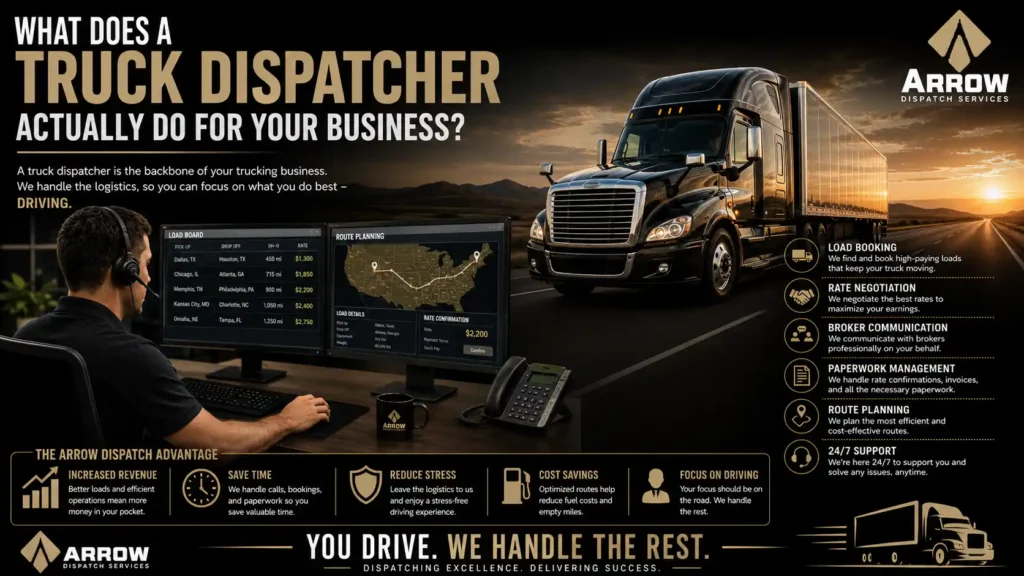
The Main Job of a Truck Dispatcher
The primary function of a truck dispatcher is, in the most basic sense, matching carriers with freight.
That really is their aim – to fill your truck with profitable loads and reduce downtime.
Each hour that nothing’s in the truck is revenue lost. By finding available loads, talking to brokers, and planning the next move before finishing the load, dispatchers make an effort to cut down on that downtime.
This support enables owner-operators to concentrate on driving, rather than spending hours in front of a computer searching load boards.
Finding Loads That Fit Your Business
Load sourcing is one of the largest tasks of a dispatcher.
Not everything that makes a load is worth taking. A dispatcher has eyes on the rate; however, he or she will look at much more than that and may tell if the freight makes sense for your operation.
They take into consideration:
- Mileage
- Fuel costs
- Drops & pickup points
- Deadhead distance
- Market conditions
- Delivery schedules
experienced dispatchers filter out prospective loads, instead looking out for freight that fits your lanes and revenue-mix.
This is even more advantageous in the poor freight markets from time to time, when it is crucial to have patience and excellent industry connections to locate quality loads.
Negotiating Better Freight Rates
Many truckers underestimate how much rate negotiation affects profitability.
The rate posted by a broker is often just a starting point.
Experienced dispatchers know how to negotiate based on:
- Current market rates
- Equipment availability
- Freight urgency
- Lane demand
- Historical pricing data
Even small improvements in load rates can add up significantly over weeks and months.
For example, adding an extra $100 to several loads each week can make a noticeable difference in annual revenue.
Strong negotiators often earn their dispatch fee through better rate agreements alone.
Managing Broker Communication
Communication is a de facto part of each and every load.
Brokers need updates. Appointments change. Delivery times shift. Unexpected delays happen.
The dispatcher is the primary link between the carrier and broker.
RQDs prevent truckers from answering phone calls while on the road and switch to communication by dispatchers.
This provides a more professional experience for brokers and helps to promote business relationships in the long run.
One of the reasons that brokers tend to pick on carriers with organized dispatch is because of reliable communication.
Planning Routes and Reducing Empty Miles
That doesn’t mean that an empty truck isn’t profitable.
One reason is excessive deadhead miles.
Deadhead’ means to drive without a load. Not all the miles are created equal – although some are unavoidable, too many empty miles can rapidly cut into profits.
Dispatchers alleviate this issue by strategically planning freight.
Waiting until the end of your delivery, they ‘eye’ where your load stops and then start looking for the next potential customer.
The objective is to minimise the time that the truck spends empty, while also keeping it earning revenue.
The practice of deadheading can make a significant difference in fuel expenses over a year and profitability.
Handling Paperwork and Administrative Tasks
Even if paperwork isn’t the most thrilling aspect of trucking, it’s necessary.
All loads are accompanied by paperwork, which must be filled out properly.
Often dispatchers help with:
- Carrier packets
- Rate confirmations
- Load information
- Appointment details
- Delivery instructions
- Broker requirements
This helps minimize errors and maintain organization.
Owner-Operators who are doing all aspects of their own business can save a few hours a week by having someone else do these administrative tasks.
Helping New Authorities Get Started
There is a lot to learn when you start a trucking company.
One of the challenges a new government faces is:
- Finding freight
- Building broker relationships
- Understanding market rates
- Completing paperwork correctly
- Managing load negotiations
There are lots of dispatchers out there who specialize in assisting brand-new carriers with these difficulties.
The professionals have an insight into the market and can assist the new owners who trade weekly or even daily in avoiding some common pitfalls.
It can particularly come in handy in the initial months of operation.
Building Broker Relationships
If you have a successful trucking business, you don’t expect to make a one-off deal.
Building solid broker relationships can set you up for success over the long haul.
Dispatchers meet with brokers day in and day out as they begin to build trust over the long haul.
Brokers tend to be more willing to provide future opportunities to carriers who know how to communicate effectively, make timely deliveries, and deal with freight professionally.
Such relationships can result in:
- Better rates
- More consistent freight
- Preferred load opportunities
- Faster booking processes
The best loads often don’t make it to the load boards, but instead are offered to trusted carriers.
Good dispatchers know the importance of relationship-building and make the effort to sustain the relationship.
Monitoring Market Conditions
Freight markets are dynamic entities, in constant flux.
There is some seasonality, and factors such as fuel costs, demand for equipment, and regional capacities influence rates.
Dispatchers spend time tracking these trends, which can aid in making informed decisions.
A load might only be accepted because it will be available at the present location, but there are better prospects of the required load in the immediate vicinity, which would make the immediate acceptance act a wrong move.
Orchestrating smart moves in the market, dispatchers put the trucks in the smart position and maximize earnings.
Providing Operational Support
But more than just making books, many dispatchers can be an added set of eyes and ears for the company.
They assist carriers in making intelligent choices about:
- Freight selection
- Lane planning
- Revenue goals
- Scheduling
- Customer relationships
It can be really useful to have the operation supported for small trucking businesses that don’t have office workers.
Carriers can’t go it alone and have someone helping to manage the everyday activities required to get you to your destination.
What a Dispatcher Does Not Do
There are also wrong notions associated with dispatchers.
Freight markets are not subject to a dispatcher’s control.
They can’t promise frequent, lucrative work every day.
They do not cure all the delays, detentions, or brokers’ problems.
No matter how good the dispatcher is, they are all operating in the market.
Their objective is to create chances, minimize inefficiencies in particular, and support carriers running their operations better.
It is important to be aware of these to set realistic expectations.
Is Hiring a Dispatcher Right for Your Business?
Again, it depends on your circumstances.
Some OEs love to negotiate their loads, as well as undertake all the operations.
Others would rather spend their time driving, leaving freight sourcing and negotiation to somebody else.
A dispatch service might be for some if:
- It takes too long to find loads.
- Having a difficult time with rate negotiations
- You and your business are looking for more consistent freight.
- You are dealing with a new power.
- Some paperwork management assistance is needed.
- You want to concentrate on driving, not administration.
Your Right Dispatcher should make your operation more efficient and profitable.
Final Thoughts
A truck dispatcher is so much more than a load booker.
They assist in securing freight, negotiating rates, communicating with freight brokers, minimizing deadhead miles, monitoring the market, or helping to make a profitable business happen in the trucking world.
A dispatcher becomes crucial in the daily operations for many owner-operators and small fleets. They play a crucial role in ensuring that trucks get ready to run, businesses keep receiving income, and that things keep running smoothly.
You may be a new authority or a seasoned carrier who wants to cut costs and save time, knowing that the real job of a dispatcher can help you make smart choices and better decisions for your trucking business and for your growth.
FAQs
In the case of owner operators in the USA, it is more difficult to find steady and well-compensated loads than the actual driving of the truck. The competition is intense, the brokers are quick, and any good freight will hardly have a lengthy shelf life. Here is where dispatch services are involved. An experienced dispatcher could save some money, lessen dead air miles and enable you to drive more rather than drive all day trying to locate loads.
This guide defines exactly what truck dispatch services are, why they are important to owner operators and how to select the one that fits best in your trucking industry.
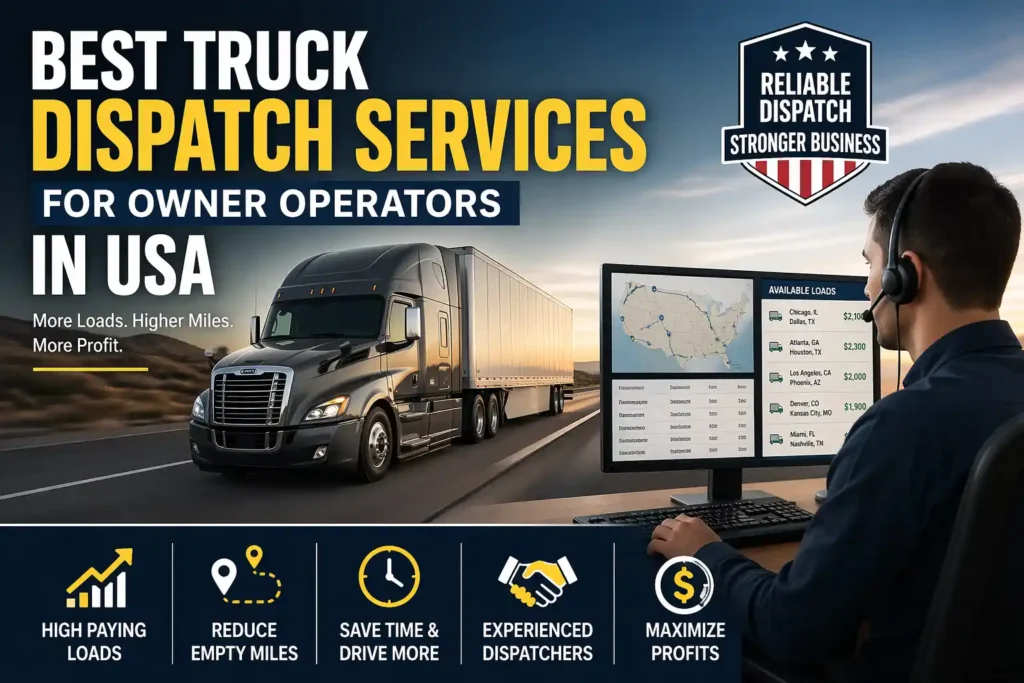
What is a truck dispatch service?
A truck dispatch service is a support service that assists truck drivers and owner operators with locating freight loads and securing them. Tasked with searching, negotiating, and making bookings, dispatchers are no longer using hours in load boards.
They have a straightforward occupation:
-
- Find available loads
-
- Contact brokers
-
- Negotiate rates
-
- Freight by truck your books.
-
- Handle basic paperwork
Simply put, they are intermediated, drivers and freight brokers.
Why owner operators need dispatch services
A lot of owner operators begin by thinking that they can do it all on their own. However, in the long run, the majority of them realize that it is a full-time job to find regular loads.
This is the actual use of dispatch services:
Saves time
You do not need to search loads all day, but instead you will be able to focus on driving and deliveries.
Better load access
Direct broker connections are often not available publicly on load boards and can only be provided by dispatchers.
Higher earning potential
An experienced dispatcher will think of how to get better freight rates.
Reduced empty miles
Fractionate dispatching makes you get backloads and limits deadhead movements.
Consistent work
Rather than random loads, you have more stable weekly routes.
What makes a good dispatch service?
Dispatch services are not all alike. Some are professional, seasoned, and others are mere novice load finders.
In a good dispatch service, we should find:
-
- Strong broker network
-
- Freight experience in various kinds.
-
- Clear communication
-
- Transparent pricing
-
- Skill in locating well-paying loads.
-
- Fixed assistance for your type of truck.
When a dispatcher cannot regularly supply loads, then what is the point?
Types of dispatch services for owner operators
This is because various trucks demand varying forms of dispatch support.
Box truck dispatching services.
Purposely used in Amazon relay and local freight, focused on local and regional delivery loads.
Flatbed dispatch services
Specializes in heavy and oversized freight like construction materials and equipment.
Hotshot dispatch services.
Pickup trucks with trailers are used to load fast delivery loads, which may be time-sensitive freight.
Reefer dispatch services
During the transportation of products under a certain temperature (food and pharmaceuticals).
Dry van dispatch service.
One of the most prevalent ones is transporting general freight interstate.
How dispatch services help increase profits
A good dispatching service is not one that simply locates loads. It has a direct effect on your income.
They help by:
-
- Finding higher-paying lanes
-
- Avoiding low-rate brokers
-
- Planning efficient routes
-
- Reducing fuel waste
-
- Booking backhaul loads
A single percent change in rate per mile can result in a huge rise in monthly earnings.
Common mistakes owner operators make
Too many drivers can not work not due to the absence of work, but due to the miscalculations:
-
- Taking low loads too readily.
-
- Collaborations with inexperienced dispatchers.
-
- Using a single source of load.
-
- Failure to plan the return trips.
-
- Not considering fuel and route efficiency.
These are some of the mistakes that should be avoided to contribute significantly to profitability.
How to choose the best truck dispatch service in USA
Check: Before working with any dispatch company, examine:
Experience
The length of time that they have been in the trucking industry.
Load network
The existence of strong relationships with brokers and shippers.
Transparency
Proper definition of fees and commission system.
Communication
Quick reaction and adequate movement updates on loads.
Results
Potential to supply regular and lucrative loads.
Conclusion
A good dispatch service is more than a support tool to owner operators in the USA: it can be a business partner. It not only curbs downtime but also improves the quality of loads and overall profits.
The thing, though, is selecting the appropriate dispatcher. One feeble service will cost you time, and a good one will always get your truck going and make you a profit.
Assuming that you want consistent traffic and improved revenues, then one of the most efficient dosses that you can take in the trucking sector is to engage a solid dispatch service.