Every load isn’t worth hauling. Some loads look profitable at first, but once you factor in long waiting times, low rates, excessive deadhead miles, or unreliable brokers, they can quickly reduce your earnings. For new owner-operators, it can be difficult to identify these problems before accepting a load.

This is where a professional truck dispatch service adds value. An experienced dispatcher doesn’t just find freight—they help you avoid freight that could waste your time, increase your expenses, or hurt your business.

In this guide, you’ll learn how dispatch services help owner-operators stay away from bad freight and focus on loads that support long-term success.

What Is Bad Freight?

Bad freight isn’t simply a load with a lower rate. It’s any load that creates more problems than profit.

Examples include:

  • Low-paying loads
  • Long deadhead miles
  • Unreasonable pickup or delivery schedules
  • Excessive detention time
  • Unreliable brokers
  • Poor reload opportunities
  • Complicated delivery requirements
  • High operating costs compared to revenue

A professional dispatcher evaluates more than just the posted rate before recommending a load.

Why New Owner-Operators Often Accept Bad Freight

Many new drivers feel pressure to keep their trucks moving at all costs.

This often leads to accepting loads without considering:

  • Cost per mile
  • Fuel expenses
  • Time commitment
  • Deadhead distance
  • Broker reputation
  • Future load opportunities

Without experience, it can be difficult to recognise warning signs before it’s too late.

Dispatchers Evaluate the Entire Load

A quality dispatch service looks at the complete picture instead of focusing only on the total payout.

Before recommending a load, they consider:

  • Revenue per mile
  • Pickup location
  • Delivery location
  • Deadhead miles
  • Reload potential
  • Appointment schedules
  • Market demand
  • Overall profitability

This approach helps reduce costly mistakes.

They Research Broker Reliability

Not every broker offers the same level of service.

Experienced dispatchers often know which brokers consistently communicate well and process payments on time.

Before booking freight, they may review:

  • Broker reputation
  • Payment history
  • Communication quality
  • Business relationships
  • Previous experiences

Working with dependable brokers helps reduce unnecessary risk.

They Help You Avoid Low-Paying Loads

A load with a high total payout isn’t always profitable.

Dispatchers calculate whether the freight makes financial sense after considering:

  • Fuel costs
  • Maintenance expenses
  • Deadhead miles
  • Driver time
  • Tolls
  • Truck operating costs

If the numbers don’t work, they continue searching for better opportunities.

They Reduce Deadhead Miles

One of the biggest hidden costs in trucking is empty driving.

Professional dispatchers work to:

  • Find reloads close to delivery locations
  • Keep trucks in active freight markets
  • Connect loads efficiently
  • Minimise unnecessary repositioning

Reducing deadhead helps improve both fuel efficiency and weekly profits.

They Plan Beyond the Current Load

Bad freight often creates another problem after delivery.

For example, a load may end in an area with little outbound freight, forcing you to drive hundreds of empty miles.

Dispatchers think ahead by asking:

  • Is freight available after delivery?
  • Will another load be easy to book?
  • Is this market active enough to support continued work?

Planning ahead helps avoid expensive downtime.

They Negotiate Better Freight Rates

Many brokers expect negotiation.

Experienced dispatchers understand current market conditions and negotiate rates based on:

  • Freight demand
  • Equipment availability
  • Lane pricing
  • Delivery urgency
  • Seasonal trends

A better rate can turn an average load into a profitable one.

They Watch Market Conditions

Freight markets change throughout the year.

Professional dispatchers monitor:

  • Seasonal demand
  • Regional freight volumes
  • Fuel prices
  • Market rates
  • Lane performance

This information helps them avoid weaker freight markets whenever possible.

They Protect Your Time

Bad freight doesn’t only cost money—it also wastes valuable driving hours.

Examples include:

  • Long loading delays
  • Multiple unnecessary stops
  • Poor scheduling
  • Excessive waiting at warehouses

Dispatchers review load details carefully to reduce these time-consuming situations.

They Help You Stay Organised

Rushed decisions often lead to poor freight choices.

A dispatcher keeps important information organised, including:

  • Rate confirmations
  • Appointment times
  • Pickup instructions
  • Delivery requirements
  • Broker communication

Having clear information helps avoid misunderstandings and delays.

They Focus on Long-Term Profitability

Accepting every available load may keep your truck moving, but it doesn’t always grow your business.

Professional dispatchers focus on:

  • Consistent earnings
  • Efficient scheduling
  • Reliable brokers
  • Better freight lanes
  • Repeat business
  • Reduced operating costs

Their goal is to build a stable operation instead of chasing short-term revenue.

Warning Signs of Bad Freight

Learning to recognise warning signs can help you make better decisions.

Be cautious if a load includes:

  • Extremely low rates
  • Long unpaid waiting times
  • Excessive deadhead miles
  • Poor communication
  • Unrealistic delivery schedules
  • Complicated instructions without additional pay
  • Delivery into weak freight markets

These situations often reduce profitability.

Why Experience Makes a Difference

Experienced dispatchers review hundreds of loads every week.

Over time, they develop a better understanding of:

  • Market pricing
  • Reliable brokers
  • Profitable freight lanes
  • Seasonal trends
  • Customer expectations

This knowledge allows them to identify better freight opportunities more quickly.

How Owner-Operators Benefit

Working with a professional dispatch service can help owner-operators:

  • Spend less time searching for freight
  • Avoid poor-paying loads
  • Reduce deadhead miles
  • Improve weekly revenue
  • Build broker relationships
  • Stay organised
  • Focus on driving safely

These benefits contribute to a more efficient trucking business.

Choosing the Right Dispatch Service

Not every dispatch company provides the same level of support.

Look for one that:

  • Communicates clearly
  • Negotiates freight rates
  • Understands your equipment type
  • Focuses on profitable loads
  • Plans routes carefully
  • Has experience in your preferred freight lanes

A dependable dispatch partner works in your best interest, not just to book the next available load.

Final Thoughts

Bad freight can quietly reduce your profits through low rates, long waiting times, unnecessary deadhead miles, and poor planning. While it’s impossible to avoid every challenge in trucking, working with an experienced dispatch service greatly improves your chances of making smarter load decisions.

By evaluating profitability, researching brokers, planning ahead, negotiating rates, and keeping your truck in stronger freight markets, dispatchers help owner-operators focus on quality freight rather than simply accepting every available load. Over time, this approach creates a more efficient, profitable, and sustainable trucking business.

Frequently Asked Questions

What is considered bad freight?

Bad freight is any load that reduces profitability because of low rates, excessive deadhead miles, long waiting times, unreliable brokers, or poor reload opportunities.

How do dispatch services identify bad freight?

Dispatchers review rates, operating costs, broker reliability, pickup and delivery schedules, market conditions, and reload opportunities before recommending a load.

Can a dispatcher help me avoid low-paying loads?

Yes. A professional dispatcher negotiates rates and compares available freight to help you choose loads that better match your operating costs and business goals.

Why are deadhead miles important?

Deadhead miles increase fuel and maintenance costs without generating revenue. Reducing them improves overall profitability.

Do dispatch services research brokers?

Many experienced dispatchers work with trusted brokers and review their reputation, payment practices, and communication history before booking freight.

Is every low-paying load considered bad freight?

Not always. Some lower-paying loads may lead to stronger freight markets or valuable reload opportunities. A dispatcher looks at the complete trip before making a recommendation.

How can dispatch services improve long-term profitability?

They help reduce downtime, negotiate better rates, minimise empty miles, build broker relationships, and plan freight more strategically.

Should new owner-operators use a dispatch service?

Many new owner-operators benefit from dispatch services because they provide industry experience, save time, improve load selection, and help avoid costly mistakes.

In the case of owner operators in the USA, it is more difficult to find steady and well-compensated loads than the actual driving of the truck. The competition is intense, the brokers are quick, and any good freight will hardly have a lengthy shelf life. Here is where dispatch services are involved. An experienced dispatcher could save some money, lessen dead air miles and enable you to drive more rather than drive all day trying to locate loads.


This guide defines exactly what truck dispatch services are, why they are important to owner operators and how to select the one that fits best in your trucking industry.
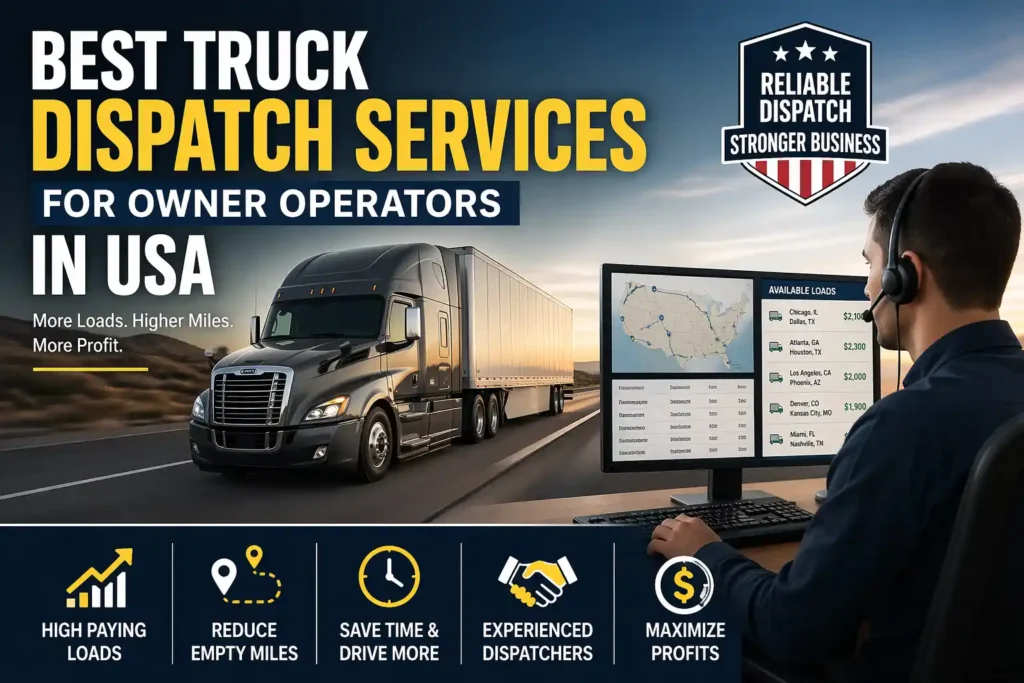
Best Truck Dispatch Services for Owner Operators in USA

What is a truck dispatch service?

A truck dispatch service is a support service that assists truck drivers and owner operators with locating freight loads and securing them. Tasked with searching, negotiating, and making bookings, dispatchers are no longer using hours in load boards.

They have a straightforward occupation:


    • Find available loads

    • Contact brokers

    • Negotiate rates

    • Freight by truck your books.

    • Handle basic paperwork

Simply put, they are intermediated, drivers and freight brokers.

Why owner operators need dispatch services

A lot of owner operators begin by thinking that they can do it all on their own. However, in the long run, the majority of them realize that it is a full-time job to find regular loads.

This is the actual use of dispatch services:

Saves time

You do not need to search loads all day, but instead you will be able to focus on driving and deliveries.

Better load access

Direct broker connections are often not available publicly on load boards and can only be provided by dispatchers.

Higher earning potential

An experienced dispatcher will think of how to get better freight rates.

Reduced empty miles

Fractionate dispatching makes you get backloads and limits deadhead movements.

Consistent work

Rather than random loads, you have more stable weekly routes.

What makes a good dispatch service?

Dispatch services are not all alike. Some are professional, seasoned, and others are mere novice load finders.

In a good dispatch service, we should find:


    • Strong broker network

    • Freight experience in various kinds.

    • Clear communication

    • Transparent pricing

    • Skill in locating well-paying loads.

    • Fixed assistance for your type of truck.

When a dispatcher cannot regularly supply loads, then what is the point?

Types of dispatch services for owner operators

This is because various trucks demand varying forms of dispatch support.

Box truck dispatching services.

Purposely used in Amazon relay and local freight, focused on local and regional delivery loads.

Flatbed dispatch services

Specializes in heavy and oversized freight like construction materials and equipment.

Hotshot dispatch services.

Pickup trucks with trailers are used to load fast delivery loads, which may be time-sensitive freight.

Reefer dispatch services

During the transportation of products under a certain temperature (food and pharmaceuticals).

Dry van dispatch service.

One of the most prevalent ones is transporting general freight interstate.

How dispatch services help increase profits

A good dispatching service is not one that simply locates loads. It has a direct effect on your income.

They help by:


    • Finding higher-paying lanes

    • Avoiding low-rate brokers

    • Planning efficient routes

    • Reducing fuel waste

    • Booking backhaul loads

A single percent change in rate per mile can result in a huge rise in monthly earnings.

Common mistakes owner operators make

Too many drivers can not work not due to the absence of work, but due to the miscalculations:


    • Taking low loads too readily.

    • Collaborations with inexperienced dispatchers.

    • Using a single source of load.

    • Failure to plan the return trips.

    • Not considering fuel and route efficiency.

These are some of the mistakes that should be avoided to contribute significantly to profitability.

How to choose the best truck dispatch service in USA

Check: Before working with any dispatch company, examine:

Experience

The length of time that they have been in the trucking industry.

Load network

The existence of strong relationships with brokers and shippers.

Transparency

Proper definition of fees and commission system.

Communication

Quick reaction and adequate movement updates on loads.

Results

Potential to supply regular and lucrative loads.

Conclusion

A good dispatch service is more than a support tool to owner operators in the USA: it can be a business partner. It not only curbs downtime but also improves the quality of loads and overall profits.

The thing, though, is selecting the appropriate dispatcher. One feeble service will cost you time, and a good one will always get your truck going and make you a profit.

Assuming that you want consistent traffic and improved revenues, then one of the most efficient dosses that you can take in the trucking sector is to engage a solid dispatch service.