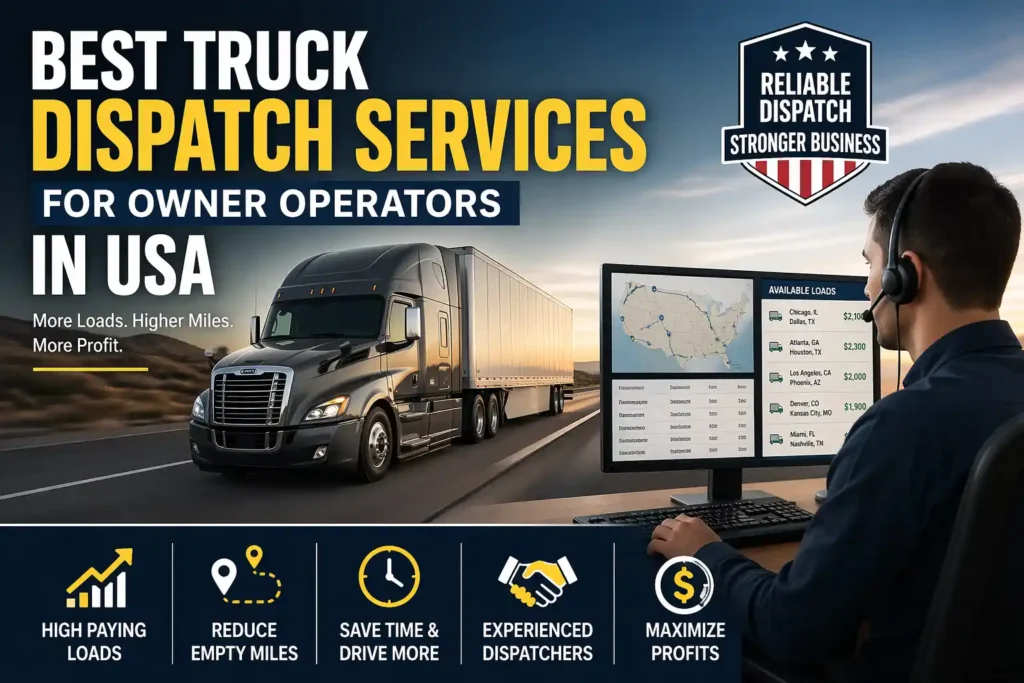
Running a trucking business comes with plenty of expenses. Fuel, insurance, maintenance, permits, repairs, and equipment can quickly reduce your profit. For owner-operators and small fleets, controlling operating costs is important, but saving money should not mean sacrificing the quality of dispatch support.
Affordable truck dispatch services can help carriers manage daily freight operations without the cost of hiring a full-time in-house dispatcher. A professional dispatcher can search for loads, negotiate rates, communicate with brokers, manage paperwork, and help reduce unnecessary downtime.
The key is finding a dispatch service that offers a reasonable price while still providing reliable support and useful freight opportunities.
What Are Affordable Truck Dispatch Services?
Affordable truck dispatch services provide professional dispatch support at a cost that fits the carrier’s budget. These services are commonly used by owner-operators, independent carriers, and small trucking fleets.
A dispatcher may handle tasks such as:
- Finding suitable freight
- Searching load boards
- Negotiating rates
- Communicating with brokers
- Scheduling pickups and deliveries
- Managing rate confirmations
- Planning routes
- Monitoring shipments
- Looking for reload opportunities
- Reducing unnecessary deadhead miles
Instead of hiring a full-time employee, carriers can outsource these responsibilities to a dispatch company.
Why Affordable Dispatch Services Matter
For a small trucking business, every expense matters.
Hiring an in-house dispatcher means paying a salary along with payroll taxes, benefits, equipment, software, office costs, and other employee-related expenses.
An outsourced dispatch service can provide professional support without many of these fixed costs.
This makes dispatch services an attractive option for owner-operators and small fleets that want to control expenses while keeping their trucks moving.
How Much Do Truck Dispatch Services Cost?
Truck dispatch fees vary depending on the company, services provided, fleet size, equipment, and pricing structure.
Common pricing models include:
Percentage-Based Dispatch Fees
Some dispatch companies charge a percentage of the gross revenue from each completed load.
This structure means the dispatch cost changes with your freight revenue.
Flat-Fee Dispatch Services
Other companies charge a fixed fee per load or a weekly amount.
A flat fee can make budgeting easier because the dispatch cost is more predictable.
Why the Lowest Price Is Not Always the Best Choice
A cheap dispatch service may look attractive initially, but price should not be the only factor.
If a dispatcher provides poor communication, books unsuitable freight, or fails to negotiate effectively, a lower fee may not actually save you money.
The better question is:
What value am I receiving for the dispatch fee?
What Should Affordable Truck Dispatch Services Include?
A reasonably priced dispatch service should still provide the essential support needed to operate efficiently.
Look for services that include:
- Load searching
- Rate negotiation
- Broker communication
- Load booking
- Route planning
- Appointment scheduling
- Rate confirmation management
- Dispatch support
- Shipment updates
- Basic paperwork assistance
Always confirm exactly what is included before signing an agreement.
Benefits of Affordable Truck Dispatch Services
Lower Overhead
Outsourcing dispatch can help reduce the cost of maintaining an internal dispatch department.
You pay for the service you need without taking on the full cost of another employee.
More Time for Drivers
Searching for loads and calling brokers can take hours.
A dispatcher handles much of this work so drivers can spend more time driving and completing deliveries.
Professional Rate Negotiation
Freight rates change based on market conditions, equipment, lane, demand, and capacity.
Experienced dispatchers negotiate with brokers regularly and can help carriers pursue competitive rates.
Less Administrative Work
Dispatch paperwork can become time-consuming.
Professional dispatchers can organize rate confirmations, broker information, appointments, and other load-related details.
Reduced Downtime
A truck sitting empty does not generate revenue.
Dispatchers continuously search for suitable freight and reload opportunities to help keep trucks moving.
Affordable Dispatch Services for Owner-Operators
Owner-operators often handle everything themselves.
They drive the truck, manage expenses, communicate with brokers, search for loads, and deal with paperwork.
This can become difficult, especially after a long day on the road.
Affordable dispatch services allow owner-operators to outsource the time-consuming parts of freight management while keeping control over their business.
The owner-operator can still decide which loads make sense based on rate, destination, home time, and operating costs.
Affordable Dispatch Services for Small Fleets
Small fleet owners face a different challenge.
When several trucks operate at the same time, managing freight for every driver requires constant attention.
An outsourced dispatch company can coordinate multiple trucks, communicate with drivers, search for freight, and manage load schedules.
This can be more practical than hiring a full-time dispatcher before the fleet is large enough to justify the expense.
Equipment Types Supported by Dispatch Companies
Before hiring a dispatch service, confirm that the company has experience with your equipment.
Depending on the provider, services may be available for:
- Dry Van
- Reefer
- Flatbed
- Step Deck
- Power Only
- Box Truck
- Hotshot
- Conestoga
Each equipment type has different freight requirements and market conditions. A dispatcher who understands your equipment can make more informed load decisions.
How Affordable Dispatch Services Can Improve Profitability
Lower dispatch costs are useful, but the real goal is improving your overall operation.
A good dispatcher can help by focusing on:
Better Load Selection
The highest gross rate is not always the most profitable load.
Fuel costs, deadhead miles, tolls, loading time, and the next available load all affect the actual value of a trip.
Reduced Empty Miles
Deadhead miles increase expenses without generating revenue.
Strategic reload planning can help reduce unnecessary empty travel.
Better Route Planning
Efficient routes can save fuel, time, and truck wear.
A dispatcher should consider both the current shipment and the truck’s next position.
Consistent Freight
A steady flow of suitable freight can help reduce unnecessary downtime.
This is especially important for owner-operators who have regular truck payments, insurance, and maintenance expenses.
How to Find Affordable Truck Dispatch Services
Start by comparing several dispatch companies rather than choosing the first one you find.
Look at:
- Dispatch fees
- Services included
- Industry experience
- Equipment specialization
- Communication
- Broker relationships
- Contract terms
- Customer reviews
- Load selection process
Ask each company how its service works and what you receive for the fee.
Questions to Ask Before Hiring a Dispatch Company
Before signing a dispatch agreement, ask:
- What is your dispatch fee?
- Is the fee percentage-based or flat-rate?
- Are there additional charges?
- Which equipment types do you handle?
- How do you find freight?
- How do you negotiate rates?
- Do I approve every load?
- What paperwork do you handle?
- How often will I receive updates?
- Is there a minimum contract period?
- What are the cancellation terms?
Clear answers can help you compare services fairly.
Red Flags to Watch For
Affordable does not mean unreliable.
Be careful with dispatch companies that:
- Promise guaranteed weekly income
- Hide additional fees
- Refuse to explain their contract
- Pressure you to accept every load
- Have poor communication
- Do not understand your equipment
- Cannot explain how they select freight
- Focus only on booking loads instead of profitability
A professional dispatch company should be transparent about what it can and cannot provide.
Affordable Truck Dispatch vs In-House Dispatcher
For a single owner-operator or small fleet, outsourced dispatch is often more flexible than hiring an employee.
An in-house dispatcher requires salary, payroll costs, benefits, equipment, software, training, and coverage for vacations or sick days.
An outsourced dispatch company allows you to pay for professional services without taking on the same employment-related expenses.
For larger fleets, however, an in-house dispatch team may eventually make more sense because of the volume and complexity of operations.
How to Get the Most Value From a Dispatch Service
Your dispatcher can work more effectively when you provide clear information.
Tell them about:
- Preferred lanes
- Minimum rate expectations
- Home-time requirements
- Equipment limitations
- Preferred load lengths
- Areas you avoid
- Driver availability
- Delivery preferences
Clear expectations help the dispatcher search for freight that actually fits your business.
Is an Affordable Truck Dispatch Service Worth It?
For many owner-operators and small fleets, it can be.
The value depends on the quality of the service rather than the fee alone.
A good dispatcher can save time, reduce administrative work, improve load planning, negotiate rates, and help reduce empty miles.
Before hiring one, compare the total cost against the time and operational workload you are trying to eliminate.
Final Thoughts
Affordable truck dispatch services can give owner-operators and small fleets access to professional dispatch support without the expense of maintaining a full-time in-house dispatcher.
The best option is not necessarily the company with the lowest fee. Look for transparent pricing, reliable communication, freight market knowledge, experience with your equipment, and a clear understanding of your business goals.
When the service provides real value, affordable dispatch support can help reduce workload, improve efficiency, and give you more time to focus on running and growing your trucking business.
Frequently Asked Questions
What are affordable truck dispatch services?
Affordable truck dispatch services provide professional load searching, rate negotiation, broker communication, route planning, and dispatch support at a cost designed to fit the carrier’s budget.
How much do affordable truck dispatch services cost?
Costs vary by provider. Some companies charge a percentage of load revenue, while others use flat fees per load or weekly pricing.
Are cheap truck dispatch services worth it?
The lowest price does not always provide the best value. Consider the services included, communication, freight knowledge, and overall support before choosing a provider.
Can affordable dispatch services help owner-operators?
Yes. Owner-operators can use dispatch services to save time, reduce paperwork, negotiate freight rates, and find suitable loads while focusing on driving.
Can small fleets use affordable dispatch services?
Yes. Small fleets can outsource dispatch operations instead of hiring an in-house dispatcher, which can help control overhead as the business grows.
What should I look for in an affordable dispatch company?
Look for transparent pricing, experienced dispatchers, strong communication, knowledge of your equipment, reliable support, and clear contract terms.
Do affordable dispatch companies negotiate freight rates?
Professional dispatch companies typically negotiate with brokers on behalf of carriers. The quality of negotiation depends on the dispatcher’s experience and knowledge of the freight market.
Can dispatch services reduce deadhead miles?
They can help reduce deadhead by planning reloads and considering the truck’s next location when selecting freight.
Do I have to accept every load a dispatcher finds?
The exact process depends on the dispatch agreement, but carriers should understand their rights and load approval process before signing a contract.
Are dispatch services better than hiring an in-house dispatcher?
For owner-operators and many small fleets, outsourced dispatch can be more cost-effective because it avoids many employee-related expenses. Larger fleets may benefit from an in-house team as operations expand.