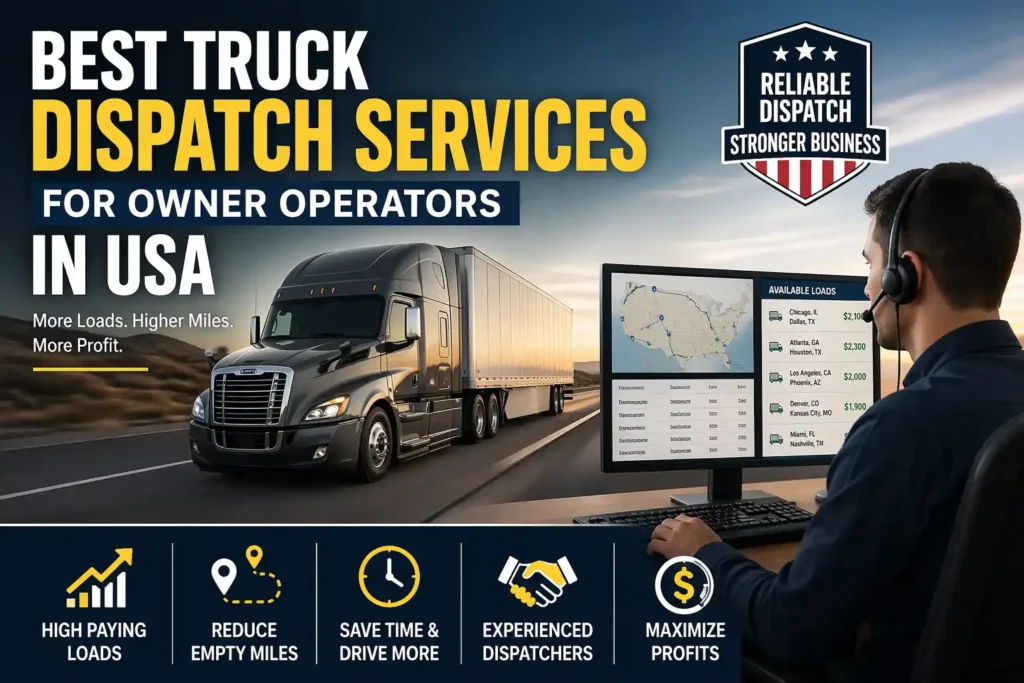
Finding good-paying loads, negotiating fair rates, and keeping your truck moving can take up a large part of your day. For owner-operators and small trucking companies, managing these tasks while staying on the road is not always easy. This is where a reliable truck dispatch service can help.
Texas is an important state for the trucking industry. Its major cities, distribution centers, manufacturing facilities, and busy freight routes create opportunities for carriers hauling different types of loads. However, finding profitable freight requires more than accepting the first load that comes along. You need to consider the rate, mileage, delivery schedule, fuel costs, and the possibility of finding another load after delivery.
The best truck dispatch service in Texas helps carriers manage these responsibilities more efficiently. A good dispatcher searches for suitable loads, communicates with brokers, negotiates rates, and handles important paperwork so drivers can focus on running their businesses.
In this guide, we will explain what a truck dispatch service does, what to look for when choosing one, and how the right dispatch partner can support your trucking business.
What Is a Truck Dispatch Service?
A truck dispatch service helps owner-operators and trucking companies find freight and coordinate their loads. Instead of spending hours searching load boards and contacting brokers, carriers can work with a dispatcher who handles many of these tasks on their behalf.
Dispatch services commonly help with:
- Finding available loads that match your equipment.
- Comparing load rates, mileage, and delivery requirements.
- Negotiating rates with freight brokers.
- Communicating with brokers and shippers when appropriate.
- Coordinating pickup and delivery schedules.
- Reviewing rate confirmations and managing dispatch paperwork.
- Helping plan routes and reduce unnecessary empty miles.
- Providing updates when load details or schedules change.
The exact services depend on the dispatch company and the agreement you sign.
A dispatcher does not guarantee a specific income or a steady supply of high-paying loads. Freight rates change with market conditions, location, equipment type, and demand. A good dispatch service helps you evaluate available opportunities and make more informed decisions.
Why Texas Truckers Use Dispatch Services
Texas offers freight opportunities across several industries, including manufacturing, construction, retail, agriculture, and energy. Carriers may find loads moving between major cities or traveling to other states.
However, a busy freight market does not automatically mean every load will be profitable. A truck can cover hundreds of miles and still produce a poor return if the rate does not cover operating expenses.
Here are some reasons owner-operators and carriers consider professional dispatch support.
1. Finding Better Freight Opportunities
Searching for suitable freight takes time. You may need to compare multiple load listings, contact brokers, confirm pickup details, and determine whether a load fits your schedule.
A truck dispatcher helps narrow down these options based on your equipment, location, preferred lanes, and business requirements.
For example, a dry van owner-operator based in Dallas may want freight heading toward Houston, San Antonio, or another market with suitable return loads. A dispatcher can help compare available options instead of choosing a load based only on its advertised rate.
2. Saving Time on Load Booking
Running a trucking business involves much more than driving. You also need to manage documents, communicate with brokers, track schedules, and plan your next move.
A dispatch service can handle much of the load-searching and booking process. This gives you more time to concentrate on driving, maintaining your equipment, and managing other parts of your business.
The amount of time saved depends on your workload and the services included in your dispatch agreement.
3. Negotiating Freight Rates
The first rate offered by a broker may not always be the best available rate. Depending on the shipment and market conditions, there may be room to negotiate.
An experienced dispatcher can review the load details, estimate the operating costs involved, and communicate with brokers to seek better terms.
Still, a higher rate is not automatically a better deal. You should also consider deadhead miles, fuel costs, tolls, waiting time, delivery deadlines, and the location where the load ends.
4. Reducing Empty Miles
Empty miles occur when a truck travels without freight. These miles cost money because the truck still uses fuel, adds wear to its tires, and requires maintenance.
A dispatch service can help plan loads around your current location and destination. It may also look for freight near the delivery point so you have a better chance of securing your next load.
Reducing empty miles can improve your operating efficiency, although it is not always possible to eliminate them completely.
How to Choose the Best Truck Dispatch Service in Texas
Not every dispatch company offers the same level of support. Some focus on a particular equipment type, while others work with different kinds of carriers.
Before signing an agreement, consider the following factors.
Experience With Your Truck Type
Your equipment affects the freight you can haul, the brokers you work with, and the requirements you need to meet.
A dry van carrier has different needs from a flatbed, reefer, step deck, or hotshot operator. Choose a dispatch company that understands your equipment and the freight markets relevant to your business.
Ask about its experience with your preferred lanes and the types of loads you normally haul.
Clear Dispatch Fees
Before hiring a dispatcher, make sure you understand how the company charges for its services.
Common arrangements include a percentage of the load revenue or a flat fee, depending on the provider. Ask exactly what the fee covers and whether any additional charges apply.
You should also clarify when payments are due and whether the agreement requires a minimum commitment.
A low fee is not the only thing to consider. The service should provide enough value to justify its cost.
Communication and Availability
Good communication matters when you are dealing with pickup appointments, delivery deadlines, broker questions, or unexpected delays.
Ask how the dispatch team communicates with drivers and how quickly it typically responds to important issues. Find out whether support is available outside regular business hours if your routes require it.
A reliable dispatcher should keep you informed rather than leaving you guessing about load details.
Transparent Load Information
You should receive accurate information about the freight you agree to haul.
This includes the agreed rate, pickup and delivery locations, appointment times, commodity details, special requirements, and relevant broker information.
Ask whether you will have the opportunity to review load details before accepting a load. You should remain in control of the final decision.
A Written Dispatch Agreement
A written agreement protects both sides by setting clear expectations.
Before signing, check the following:
- The dispatch services included in the fee.
- The fee structure and payment terms.
- Cancellation and termination conditions.
- Any minimum contract period.
- Responsibility for paperwork and broker communication.
- How confidential business information is handled.
- Any additional charges or restrictions.
Read the agreement carefully and ask questions about anything that is unclear. Avoid signing a contract based only on verbal promises about guaranteed loads or earnings.
Truck Dispatch Services for Different Equipment Types
The best dispatch service for your business should understand the equipment you operate and the freight you want to haul.
Dry Van Dispatch Service
Dry van trailers are commonly used to transport packaged goods, retail products, household items, and other freight that does not require temperature control.
A dry van dispatcher helps find suitable loads, compare rates, coordinate appointments, and manage load paperwork. Carriers can also discuss their preferred routes and scheduling requirements.
Flatbed Dispatch Service
Flatbed trucking is used for freight such as building materials, steel, machinery, and oversized items that meet applicable transport requirements.
Flatbed loads may involve specific securement requirements, tarping, equipment considerations, and loading arrangements. A dispatcher familiar with flatbed freight can help identify loads that match the carrier’s equipment and capabilities.
Reefer Dispatch Service
Reefer trailers carry temperature-sensitive freight, including certain food products and other goods that require controlled conditions.
Dispatchers working with reefer carriers need to pay attention to temperature requirements, pickup and delivery appointments, and any special instructions provided for the shipment.
The carrier must ensure that its equipment is suitable for the freight and that all required handling procedures are followed.
Hotshot Dispatch Service
Hotshot trucking often involves smaller, time-sensitive shipments hauled using suitable pickup trucks and trailers.
Hotshot dispatch support may include finding compatible loads, reviewing shipment details, negotiating rates, and coordinating pickup and delivery schedules.
Carriers should make sure every load meets their equipment’s legal weight and capacity limits and complies with applicable regulations.
Power-Only Dispatch Service
Power-only carriers provide the tractor while using a trailer supplied by another party.
Dispatching for power-only trucks may involve finding suitable trailer-based opportunities and confirming trailer arrangements, pickup instructions, and delivery requirements before a load is accepted.
The dispatcher should understand the carrier’s operating preferences and the specific requirements of each shipment.
How a Truck Dispatch Service Helps Improve Profitability
A trucking business needs to focus on net profit, not just gross revenue. Booking more loads does not necessarily mean making more money.
For example, consider two available loads. One offers a higher total payment but requires substantial empty mileage and expensive fuel. The other pays less overall but involves fewer miles and leaves the truck in a better location for the next shipment.
The second load may provide a better financial result.
A professional dispatcher can help you compare these opportunities by considering factors such as:
Loaded miles: The distance covered while transporting freight.
Deadhead miles: The distance driven without a paying load.
Operating costs: Fuel, maintenance, insurance, truck payments, permits, and other business expenses.
Time requirements: Pickup appointments, delivery deadlines, and potential waiting time.
Next-load opportunities: Whether suitable freight may be available near the delivery location.
You should also track your own operating costs and review your results regularly. A dispatcher can provide support, but you need accurate financial information to understand whether your business is actually becoming more profitable.
Questions to Ask Before Hiring a Truck Dispatcher
Before choosing a dispatch company, ask a few practical questions.
1. Do you work with my type of truck?
Make sure the company understands your equipment and the freight you want to haul.
2. How do you find loads?
Ask which load boards, broker relationships, or other sources the dispatcher uses.
3. How are dispatch fees calculated?
Confirm the fee structure, payment terms, and any additional charges.
4. Can I reject a load?
You should understand your right to review the details and decide whether a load fits your business.
5. How do you handle broker communication and paperwork?
Ask what the dispatcher manages and what responsibilities remain with you.
6. Do you guarantee high-paying loads?
Be cautious of companies that promise guaranteed revenue or unrealistic earnings. Freight availability and rates depend on market conditions and other factors outside a dispatcher’s control.
7. Can I review the contract before signing?
A professional company should give you time to understand the agreement and clarify its terms.
These questions can help you compare providers based on their actual services instead of relying only on advertising claims.
Why Choose Arrow Dispatch Services?
Choosing the right dispatch partner can make everyday trucking operations easier. Arrow Dispatch Services provides reliable dispatch support for owner-operators and carriers who need help finding freight, coordinating loads, and managing routine dispatch tasks.
Our approach focuses on understanding each carrier’s equipment, preferred lanes, and business requirements before identifying suitable load opportunities.
With professional dispatch support, carriers can spend less time handling routine load-search tasks and more time focusing on the road and their business operations.
Arrow Dispatch Services can assist with load booking, broker communication, route planning, and dispatch paperwork, depending on the agreed services. Our goal is to help carriers make informed load decisions, reduce unnecessary downtime, and manage their time more effectively.
Whether you operate a dry van, flatbed, reefer, hotshot, or another suitable truck type, our dispatch team aims to understand your specific requirements and provide clear, dependable communication.
If you are comparing truck dispatch services in Texas, consider Arrow Dispatch Services as a dispatch partner. Review our services, ask about dispatch fees, and make sure the agreement fits your business needs before making a decision.
Frequently Asked Questions
What is the best truck dispatch service in Texas?
The best service depends on your equipment, preferred routes, budget, and level of support needed. Look for a company with relevant experience, transparent fees, clear communication, and a written agreement. Check the actual services offered rather than relying on income guarantees.
How much does a truck dispatch service cost in Texas?
Pricing varies by company and agreement. Some dispatchers charge a percentage of the load revenue, while others use a flat fee. Ask for a clear explanation of the charges and confirm what is included before signing.
Is a truck dispatch service worth it for owner-operators?
It can be worthwhile if dispatch support saves you time, helps you evaluate loads, and makes routine coordination easier. However, the value depends on the service fee, your operating costs, freight conditions, and the results you achieve.
Can a truck dispatcher help me find high-paying loads?
A dispatcher can search for available freight and negotiate when market conditions allow. However, no legitimate dispatch service can guarantee that every load will pay well. Rates depend on equipment, location, demand, mileage, and other factors.
Do Texas truck dispatch services work with small fleets?
Yes. Many dispatch companies work with owner-operators and small fleets. Before choosing one, confirm how many trucks it can support and whether its services fit your fleet size and operating requirements.
What documents do I need before using a dispatch service?
Requirements vary by provider and business arrangement. Carriers commonly need relevant business and carrier information, operating authority where applicable, insurance details, and equipment information. Confirm the exact requirements with the dispatch company and make sure your business meets all applicable regulatory obligations.
Can I choose which loads my dispatcher books?
Your dispatch agreement should explain how load approval works. Discuss this before signing and confirm that you can review load details and decide whether a shipment meets your business needs.
Final Thoughts
Finding the best truck dispatch service in Texas starts with understanding what your trucking business needs. Look for a dispatcher who understands your equipment, communicates clearly, explains fees upfront, and helps you evaluate loads based on more than the advertised rate.
The right support can make load booking, broker communication, and paperwork easier to manage. However, your results will still depend on freight market conditions, operating costs, route choices, and how you run your business.
Take time to compare dispatch companies, review their agreements, and ask direct questions before committing. A service that fits your equipment and business goals is more valuable than one that simply promises the highest rates.