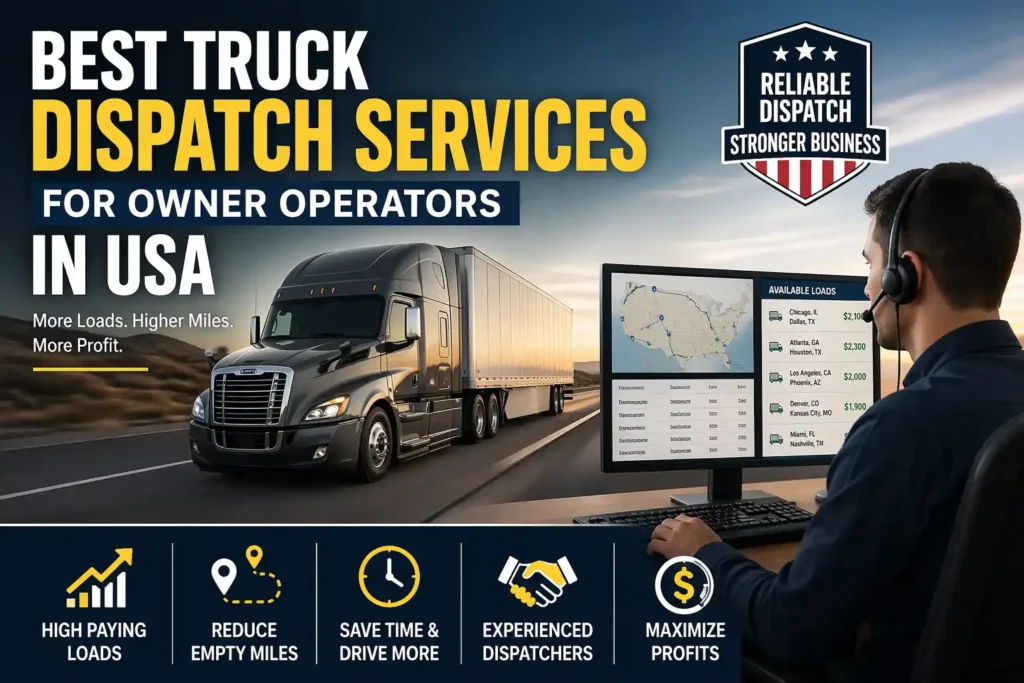
Choosing a truck dispatcher is an important decision for an owner-operator or small trucking company. The right dispatcher can help with load searches, broker communication, rate negotiation, paperwork, route planning, and day-to-day freight management. The wrong fit can create unnecessary delays, poor load choices, communication problems, and extra costs.
There is no single dispatcher that works for every carrier. Your equipment, preferred lanes, revenue goals, home-time requirements, and level of experience all matter.
Before hiring a dispatcher, take time to understand how they work, what they charge, and what they can realistically provide. A good dispatch relationship should make your operation more organized without taking away your control over your business.
What Does a Truck Dispatcher Do?
A truck dispatcher helps carriers manage the freight side of their operation. Depending on the service agreement, a dispatcher may search for loads, contact brokers, negotiate rates, arrange appointments, manage paperwork, track shipments, and look for the next load.
Typical dispatch responsibilities may include:
Finding suitable freight
Comparing available loads
Negotiating rates with brokers
Booking loads
Reviewing rate confirmations
Planning routes
Coordinating pickup and delivery times
Communicating with brokers
Following up on detention
Managing load-related paperwork
Planning the next load
Providing updates to the carrier
The exact responsibilities depend on the dispatch company and the agreement you sign. That is why it is important to discuss the scope of service before hiring anyone.
Why Choosing the Right Dispatcher Matters
Freight decisions affect much more than your schedule. A poorly selected load can increase deadhead, fuel consumption, waiting time, and unpaid miles.
For example, a load with a high gross rate may not be attractive if it requires excessive empty miles or leaves your truck in an area with limited outbound freight.
A capable dispatcher looks at the entire trip instead of focusing only on the advertised rate. They consider the pickup location, delivery location, total miles, driver availability, equipment requirements, and what freight may be available afterward.
The goal should be a better overall freight plan, not simply more loads.
1. Check the Dispatcher’s Trucking Experience
Start by asking about their experience in the trucking industry.
Find out how long they have been dispatching and what types of carriers they have worked with. Experience does not guarantee a perfect fit, but it can indicate whether the dispatcher understands common trucking challenges.
Ask whether they have experience with your equipment, such as:
Dry van
Reefer
Flatbed
Step deck
Box truck
Hotshot
Power only
A dispatcher who understands your equipment can make more informed decisions about freight requirements and load availability.
2. Make Sure They Understand Your Equipment
Your dispatcher needs to know what your truck and trailer can legally and practically haul.
A dry van carrier has different freight requirements from a reefer or flatbed operator. Flatbed loads, for example, may involve dimensions, securement requirements, tarping, and specialized equipment.
Before hiring a dispatcher, explain your equipment clearly.
Discuss:
Trailer type
Maximum weight
Trailer dimensions
Specialized equipment
Freight restrictions
Preferred commodities
Equipment availability
The dispatcher should know these details before searching for loads.
3. Ask About Their Preferred Lanes
Not every carrier wants to run everywhere.
You may prefer regional freight, long-haul routes, specific states, or particular lanes. You may also have home-time requirements that affect which loads make sense.
Ask the dispatcher which lanes they commonly work and explain where you want to operate.
A good freight plan should consider where your truck needs to be after delivery, not just where the current load takes it.
4. Understand How They Find Loads
Ask where the dispatcher gets freight.
They may use load boards, broker relationships, shipper connections, transportation platforms, or a combination of sources.
More importantly, ask how they evaluate a load before recommending it.
A proper load review should consider:
Gross rate
Loaded miles
Deadhead miles
Pickup time
Delivery appointment
Weight
Commodity
Destination
Fuel requirements
Driver hours
Next-load opportunities
This helps prevent decisions based only on the highest advertised rate.
5. Ask How They Handle Rate Negotiation
Rate negotiation can have a direct effect on your gross revenue.
Ask the dispatcher whether negotiating with brokers is part of their service and how they approach low offers.
You can ask:
“What do you do when a broker’s initial rate is below my target?”
A good answer should explain the process rather than simply promising higher rates.
You should also discuss your minimum acceptable rate and how market conditions affect that target.
6. Compare Dispatch Service Fees
Price is important, but it should not be the only factor.
Dispatch companies may charge:
A percentage of gross revenue
A flat fee per load
A monthly fee
Another agreed pricing structure
Ask exactly how the fee is calculated.
If the dispatcher charges a percentage, find out whether the percentage applies to linehaul only or includes accessorial payments.
Also ask about setup fees, administrative fees, cancellation fees, or other charges.
A written pricing structure is much easier to evaluate than a verbal promise.
7. Read the Dispatch Agreement Carefully
Never sign a dispatch agreement without reading it.
Pay attention to:
Contract length
Cancellation policy
Notice requirements
Dispatch responsibilities
Carrier responsibilities
Payment terms
Additional charges
Dispute procedures
If something is unclear, ask for an explanation before signing.
The agreement should clearly describe what both parties are expected to do.
8. Ask What Services Are Included
Do not assume every dispatch company provides full-service dispatching.
One company may only find and book loads. Another may also handle broker communication, rate negotiation, paperwork, tracking, detention, and next-load planning.
Ask for a complete list of included services.
For example:
Load search: Does the dispatcher actively search for freight?
Negotiation: Do they negotiate rates?
Paperwork: Do they review rate confirmations and carrier documents?
Tracking: Do they communicate shipment updates?
Detention: Do they follow up with brokers about detention?
Next-load planning: Do they look for the next load before delivery?
Knowing exactly what you are paying for helps you compare dispatch services fairly.
9. Evaluate Their Communication
Communication can make or break a dispatch relationship.
Ask how you will communicate with the dispatcher and how quickly they typically respond.
Find out whether they use:
Phone
Text
Email
Dispatch software
Messaging platforms
Also ask what happens when the dispatcher is unavailable.
You should know who to contact when there is a problem with a pickup, delivery, broker, or load.
10. Ask About 24/7 Dispatch Support
If you operate around the clock, ask whether the company provides after-hours support.
Do not assume that advertising “24/7 dispatch” means the same thing for every company.
Ask:
Who handles after-hours calls?
Is a dispatcher available on weekends?
What happens during holidays?
How are urgent load problems handled?
Is there an additional fee for after-hours support?
Clear expectations can prevent problems later.
11. Find Out How Many Trucks They Handle
Ask how many trucks the dispatcher currently manages.
There is no specific number that automatically makes a dispatcher good or bad. The important issue is whether they can give your truck enough attention.
If one dispatcher handles a large number of carriers, ask how they organize their workload.
You want to know that your load requests, broker calls, paperwork, and schedule will not constantly get pushed aside.
12. Ask Whether You Get a Dedicated Dispatcher
Some companies provide a dedicated dispatcher, while others operate with a team.
A dedicated dispatcher may become familiar with your preferred lanes, equipment, home-time needs, and business goals.
A team approach may provide more coverage when one dispatcher is unavailable.
Neither structure is automatically right for every carrier. Ask how the system works and decide whether it matches your communication preferences.
13. Check How They Handle Broker Communication
Your dispatcher may communicate with brokers several times during a load.
Ask how they handle:
Rate negotiations
Pickup changes
Delivery updates
Appointment issues
Tracking requests
Detention
Layovers
Lumper charges
Missing paperwork
A dispatcher should be able to explain how these situations are managed before you hire them.
14. Ask How They Reduce Deadhead
Empty miles cost money.
The truck still uses fuel and experiences wear while traveling without freight.
Ask the dispatcher how they account for deadhead when comparing loads.
For example, a load paying $2.50 per loaded mile may look attractive, but if the truck needs to travel 200 empty miles to reach pickup, the actual economics change.
The dispatcher should consider the entire movement of the truck.
15. Find Out How They Plan Your Next Load
A dispatcher should think beyond the current load when possible.
Suppose your truck delivers in an area where outbound freight is weak. Booking a high-paying load into that market may create a problem for the next day.
Ask how the dispatcher evaluates the destination before booking.
Good planning considers:
Where the truck will deliver
Freight availability in that area
Driver hours
Home-time requirements
Next pickup location
Expected deadhead
This type of planning can make weekly operations more consistent.
16. Ask How They Handle Detention and Layover
Waiting time can affect a driver’s schedule and revenue.
Ask whether the dispatcher handles detention requests and what documentation they need from you.
Find out whether they:
Track appointment times
Contact the broker
Request detention
Follow up on payment
Maintain supporting documents
Also ask how they handle layovers when a load cannot move according to the original schedule.
17. Ask How They Handle Paperwork
Freight paperwork needs to be accurate and organized.
Ask whether the dispatcher helps with:
Rate confirmations
Bills of lading
Proof of delivery
Lumper receipts
Detention documents
Carrier packets
Other load documents
Also clarify what you need to send to the dispatcher and when.
A simple document process can prevent missing information and billing delays.
18. Ask for References or Client Experience
If possible, ask whether the dispatch company can provide references from carriers who are willing to discuss their experience.
You can ask those carriers about:
Communication
Load quality
Rate negotiation
Reliability
Fee structure
Problem handling
Contract terms
References should not be your only source of information, but they can provide useful context.
19. Look at Reviews Carefully
Online reviews can provide additional information, but do not rely on a rating alone.
Read what customers actually say.
Look for repeated comments about:
Communication
Load selection
Broker handling
Pricing
Responsiveness
Contract issues
Customer support
One negative review does not necessarily tell the whole story, but repeated complaints about the same issue deserve attention.
20. Ask How They Measure Results
A professional dispatcher should be able to discuss measurable performance.
Ask whether they track:
Weekly gross revenue
Revenue per truck
Loaded miles
Deadhead
Rate per mile
Number of loads
Detention revenue
Time between loads
These numbers can help you determine whether the dispatch service is contributing value over time.
Remember that a dispatcher cannot control freight market conditions. Results should be evaluated over a reasonable period rather than based on one good or bad week.
Red Flags When Choosing a Truck Dispatcher
Be careful when a dispatcher:
Guarantees a specific weekly income
Promises unrealistic rates
Refuses to explain fees
Has no written agreement
Hides additional charges
Does not understand your equipment
Ignores your preferred lanes
Books loads without your approval
Avoids questions about cancellation
Cannot explain how problems are handled
A professional dispatcher should be comfortable discussing these topics openly.
How to Compare Multiple Truck Dispatchers
If you have several options, create a simple comparison based on the factors that matter to your business.
Factor
Dispatcher A
Dispatcher B
Dispatcher C
Dispatch fee
Review
Review
Review
Equipment experience
Review
Review
Review
Preferred lanes
Review
Review
Review
Rate negotiation
Review
Review
Review
Paperwork support
Review
Review
Review
Detention support
Review
Review
Review
Communication
Review
Review
Review
Contract terms
Review
Review
Review
After-hours support
Review
Review
Review
This makes it easier to compare the complete service rather than focusing only on the lowest fee.
What Information Should You Give Your Dispatcher?
Once you choose a dispatcher, give them clear information about your operation.
Tell them:
Equipment type
Maximum weight
Preferred lanes
Minimum rate expectations
Home-time requirements
Freight preferences
Areas to avoid
Driver availability
Appointment limitations
Broker preferences
Any special operating requirements
The more accurately your dispatcher understands your business, the easier it is to find freight that fits your operation.
Can a Dispatcher Increase Your Weekly Revenue?
A dispatcher can potentially improve weekly revenue by finding suitable freight, negotiating rates, reducing unnecessary empty miles, and planning loads more efficiently.
However, no dispatcher can guarantee a specific weekly income.
Revenue depends on many factors, including freight demand, equipment, operating area, fuel costs, driver availability, seasonality, and market conditions.
Instead of judging a dispatcher only by gross revenue, track the complete picture. Look at loaded miles, deadhead, revenue per mile, operating costs, and consistency.
Final Thoughts
Choosing the right truck dispatcher requires more than comparing dispatch fees.
Look at experience, equipment knowledge, freight planning, rate negotiation, communication, availability, paperwork support, contract terms, and how the dispatcher handles problems.
Most importantly, choose a dispatch arrangement that fits your actual business needs. A dispatcher should understand your operating preferences, communicate clearly, and help you make informed freight decisions without taking away your control as the carrier.
Take your time, ask detailed questions, read the agreement, and compare the complete service before making a decision.
FAQs
What should I look for in a truck dispatcher?
Look for experience, knowledge of your equipment, strong communication, clear pricing, load planning skills, rate negotiation, reliable support, and a written agreement with clear responsibilities.
How do I know if a truck dispatcher is reliable?
Ask about their experience, communication process, client references, contract terms, and how they handle load problems. Clear answers and transparent business practices are important.
How much does it cost to hire a truck dispatcher?
Costs vary by company. Some dispatchers charge a percentage of gross revenue, while others use a flat fee per load or another pricing structure.
Should I hire a dedicated truck dispatcher?
A dedicated dispatcher can provide consistent communication and become familiar with your business preferences. However, a team-based service may provide broader coverage. Compare the structure with your needs.
Can a dispatcher guarantee high-paying loads?
No dispatcher can guarantee a specific rate or weekly revenue because freight availability and market conditions change. Be cautious about unrealistic income guarantees.
What questions should I ask a dispatcher before hiring?
Ask about experience, equipment, lanes, load sources, rate negotiation, fees, contracts, communication, paperwork, detention, after-hours support, and how performance is measured.
Should my dispatcher choose my loads for me?
A dispatcher can recommend and negotiate loads, but you should understand how final load approval works. Your agreement should clearly explain who has authority to accept or reject freight.
How can a dispatcher reduce deadhead miles?
A dispatcher can consider the truck’s delivery location, available outbound freight, total trip mileage, and future load opportunities when planning freight.
What are common red flags when hiring a dispatcher?
Common warning signs include guaranteed income claims, hidden fees, unclear contracts, unrealistic rate promises, poor communication, and limited understanding of your equipment.
How long should I work with a dispatcher before evaluating results?
Evaluate performance over multiple weeks rather than judging the relationship from one load or one week. Track revenue, loaded miles, deadhead, rates, expenses, and service quality.
In the case of owner operators in the USA, it is more difficult to find steady and well-compensated loads than the actual driving of the truck. The competition is intense, the brokers are quick, and any good freight will hardly have a lengthy shelf life. Here is where dispatch services are involved. An experienced dispatcher could save some money, lessen dead air miles and enable you to drive more rather than drive all day trying to locate loads.
This guide defines exactly what truck dispatch services are, why they are important to owner operators and how to select the one that fits best in your trucking industry.
What is a truck dispatch service?
A truck dispatch service is a support service that assists truck drivers and owner operators with locating freight loads and securing them. Tasked with searching, negotiating, and making bookings, dispatchers are no longer using hours in load boards.
They have a straightforward occupation:
Find available loads
Contact brokers
Negotiate rates
Freight by truck your books.
Handle basic paperwork
Simply put, they are intermediated, drivers and freight brokers.
Why owner operators need dispatch services
A lot of owner operators begin by thinking that they can do it all on their own. However, in the long run, the majority of them realize that it is a full-time job to find regular loads.
This is the actual use of dispatch services:
Saves time
You do not need to search loads all day, but instead you will be able to focus on driving and deliveries.
Better load access
Direct broker connections are often not available publicly on load boards and can only be provided by dispatchers.
Higher earning potential
An experienced dispatcher will think of how to get better freight rates.
Reduced empty miles
Fractionate dispatching makes you get backloads and limits deadhead movements.
Consistent work
Rather than random loads, you have more stable weekly routes.
What makes a good dispatch service?
Dispatch services are not all alike. Some are professional, seasoned, and others are mere novice load finders.
In a good dispatch service, we should find:
Strong broker network
Freight experience in various kinds.
Clear communication
Transparent pricing
Skill in locating well-paying loads.
Fixed assistance for your type of truck.
When a dispatcher cannot regularly supply loads, then what is the point?
Types of dispatch services for owner operators
This is because various trucks demand varying forms of dispatch support.
Box truck dispatching services.
Purposely used in Amazon relay and local freight, focused on local and regional delivery loads.
Flatbed dispatch services
Specializes in heavy and oversized freight like construction materials and equipment.
Hotshot dispatch services.
Pickup trucks with trailers are used to load fast delivery loads, which may be time-sensitive freight.
Reefer dispatch services
During the transportation of products under a certain temperature (food and pharmaceuticals).
Dry van dispatch service.
One of the most prevalent ones is transporting general freight interstate.
How dispatch services help increase profits
A good dispatching service is not one that simply locates loads. It has a direct effect on your income.
They help by:
Finding higher-paying lanes
Avoiding low-rate brokers
Planning efficient routes
Reducing fuel waste
Booking backhaul loads
A single percent change in rate per mile can result in a huge rise in monthly earnings.
Common mistakes owner operators make
Too many drivers can not work not due to the absence of work, but due to the miscalculations:
Taking low loads too readily.
Collaborations with inexperienced dispatchers.
Using a single source of load.
Failure to plan the return trips.
Not considering fuel and route efficiency.
These are some of the mistakes that should be avoided to contribute significantly to profitability.
How to choose the best truck dispatch service in USA
Check: Before working with any dispatch company, examine:
Experience
The length of time that they have been in the trucking industry.
Load network
The existence of strong relationships with brokers and shippers.
Transparency
Proper definition of fees and commission system.
Communication
Quick reaction and adequate movement updates on loads.
Results
Potential to supply regular and lucrative loads.
Conclusion
A good dispatch service is more than a support tool to owner operators in the USA: it can be a business partner. It not only curbs downtime but also improves the quality of loads and overall profits.
The thing, though, is selecting the appropriate dispatcher. One feeble service will cost you time, and a good one will always get your truck going and make you a profit.
Assuming that you want consistent traffic and improved revenues, then one of the most efficient dosses that you can take in the trucking sector is to engage a solid dispatch service.