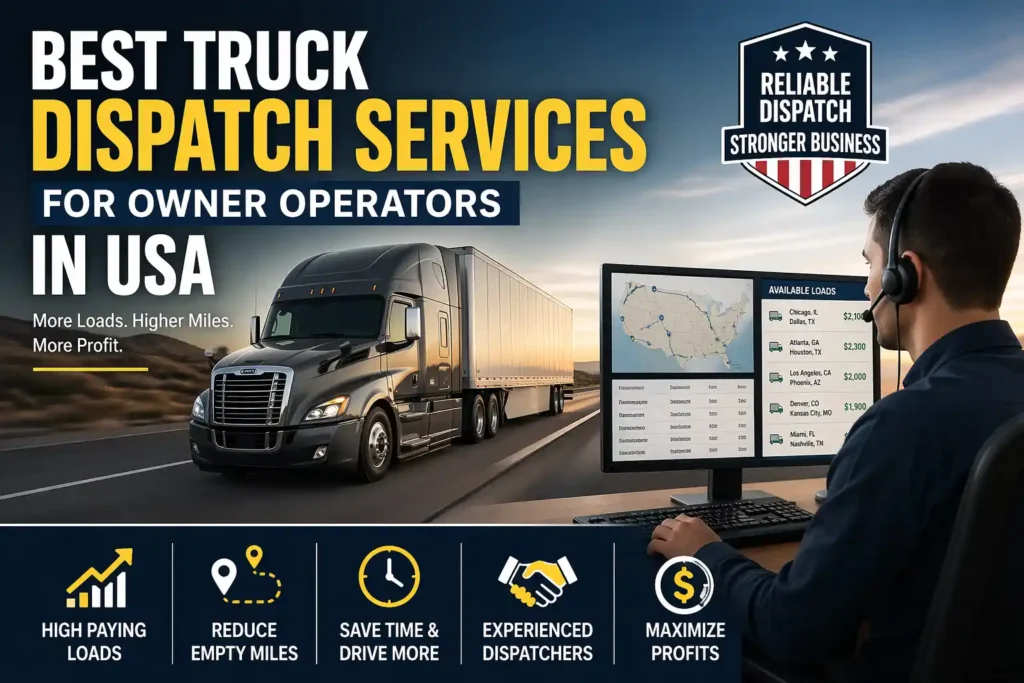
Running a successful trucking business takes more than finding loads. Every day involves negotiating rates, managing schedules, communicating with brokers, handling paperwork, and keeping trucks moving. Someone has to manage these tasks efficiently, and that usually means choosing between a dispatch company and an in-house dispatcher.
Both options can help your operation, but the right choice depends on your business size, budget, and long-term goals. Understanding the differences can help you make a decision that supports growth and improves profitability.
In this guide, we’ll compare a dispatch company vs in-house dispatcher, explain the advantages and disadvantages of each, and help you decide which option is the better fit for your trucking business.
What Is a Dispatch Company?
A dispatch company is an independent service that manages dispatch operations for carriers and owner-operators. Instead of hiring an employee, you work with experienced dispatchers who handle load booking, broker communication, paperwork, appointment scheduling, and route planning.
Most dispatch companies work with owner-operators, small fleets, and growing trucking businesses that want professional dispatch support without hiring full-time staff.
What Is an In-House Dispatcher?
An in-house dispatcher is a full-time employee who works directly for your trucking company. They manage your daily operations from within the business and focus only on your fleet.
Unlike a dispatch company that may support multiple carriers, an in-house dispatcher works exclusively for your operation.
This option is more common for medium-sized and large fleets with enough workload to justify a full-time dispatch position.
Dispatch Company vs In-House Dispatcher: Key Differences
Cost
Cost is often the first factor trucking companies consider.
A dispatch company usually charges a percentage per load or a flat weekly fee. Since you are paying only for dispatch services, there are no employee-related expenses such as salaries, health benefits, payroll taxes, office space, or training costs.
An in-house dispatcher requires a fixed salary along with additional business expenses. While this investment can make sense for larger fleets, it may not be practical for owner-operators or small carriers.
For businesses with one to five trucks, outsourcing dispatch is often the more affordable option.
Industry Experience
Professional dispatch companies work with multiple carriers across different freight markets.
Their experience allows them to understand changing freight rates, seasonal demand, broker expectations, and profitable lanes.
An in-house dispatcher can also become highly skilled, but their experience depends on their background and the opportunities they gain within your company.
Load Availability
Dispatch companies spend their entire day searching for freight and building relationships with brokers.
Many experienced dispatchers know where freight is moving and which markets offer stronger rates.
An in-house dispatcher can also develop broker relationships over time, but building those connections often takes longer.
Flexibility
A dispatch company offers flexibility as your business grows.
If you add more trucks, the dispatch company can often scale its services without requiring additional hiring.
With an in-house dispatcher, business growth may eventually require hiring more dispatch staff to handle increased workload.
Business Focus
An in-house dispatcher works only for your company.
They become familiar with your drivers, preferred routes, equipment, and operating procedures.
A dispatch company serves multiple clients, but experienced dispatchers still learn your business preferences and build dispatch strategies that fit your operation.
Technology and Resources
Many dispatch companies already use modern dispatch software, load boards, tracking systems, and communication tools.
This means carriers gain access to experienced dispatch support without investing in additional technology.
With an in-house dispatcher, your company is responsible for purchasing software, equipment, training, and system maintenance.
Advantages of Hiring a Dispatch Company
A dispatch company offers several benefits, especially for owner-operators and small fleets.
Some of the biggest advantages include:
- Lower operating costs
- No employee hiring process
- No payroll expenses
- Experienced rate negotiation
- Better load planning
- Reduced deadhead miles
- Less administrative work
- Flexible business growth
- Access to freight market knowledge
- More time to focus on driving and customer service
For many small carriers, these advantages outweigh the benefits of hiring internally.
Advantages of an In-House Dispatcher
Hiring an in-house dispatcher also has strengths.
Because they work directly for your business, communication is often faster and more personalized.
Additional benefits include:
- Complete focus on your fleet
- Direct daily communication
- Greater control over operations
- Strong understanding of company policies
- Long-term team development
- Closer relationships with drivers
For larger fleets with complex operations, these advantages can improve efficiency.
Challenges of a Dispatch Company
Although dispatch companies offer many benefits, there are some challenges to consider.
These may include:
- Less face-to-face interaction
- Service quality varies between companies
- Choosing the wrong dispatcher can affect operations
- Some companies may manage many clients at once
Working with an experienced and transparent dispatch company helps reduce these risks.
Challenges of an In-House Dispatcher
Hiring internally also comes with responsibilities.
Business owners must manage:
- Employee salaries
- Benefits and payroll taxes
- Training costs
- Office equipment
- Software expenses
- Vacation coverage
- Staff turnover
These ongoing costs can become significant for smaller trucking businesses.
Which Option Is Better for Owner-Operators?
For most owner-operators, a dispatch company is the practical choice.
Managing dispatch while driving is difficult and time-consuming.
A professional dispatcher helps find profitable loads, negotiate rates, manage paperwork, and reduce downtime without the expense of hiring a full-time employee.
This allows owner-operators to focus on delivering freight safely while growing their business.
Which Option Is Better for Small Fleets?
Small fleets with two to ten trucks often benefit from working with a dispatch company.
They receive professional dispatch support without increasing payroll expenses.
As the business expands, owners can decide whether hiring an in-house dispatcher becomes financially worthwhile.
Many successful fleets begin with outsourced dispatch before building an internal operations team.
Which Option Is Better for Large Fleets?
Large trucking companies usually benefit from in-house dispatch teams.
With many trucks operating simultaneously, dedicated dispatch staff provide greater operational control, faster communication, and better coordination across the fleet.
Some larger carriers also combine both options by maintaining an internal dispatch team while outsourcing overflow work during busy periods.
Factors to Consider Before Making a Decision
Before choosing between a dispatch company and an in-house dispatcher, consider these questions:
- How many trucks do you currently operate?
- What is your dispatch budget?
- How much administrative work do you handle each day?
- Do you need dispatch support around the clock?
- Are you planning to grow your fleet soon?
- Do you have time to hire and manage employees?
Answering these questions will help you select the solution that fits your business today while supporting future growth.
Final Thoughts
Choosing between a dispatch company and an in-house dispatcher depends on the size and needs of your trucking business. Owner-operators and small fleets often benefit from the flexibility, lower costs, and industry experience that a dispatch company provides. Larger fleets, on the other hand, may gain more value from having dedicated in-house dispatch staff who work exclusively on their operations.
There is no one-size-fits-all solution. The best choice is the one that helps your trucks stay loaded, improves operational efficiency, controls costs, and supports long-term business growth.
Frequently Asked Questions
What is the difference between a dispatch company and an in-house dispatcher?
A dispatch company provides outsourced dispatch services for carriers, while an in-house dispatcher is a full-time employee who works directly for one trucking company.
Is a dispatch company cheaper than hiring an in-house dispatcher?
In most cases, yes. Dispatch companies usually charge a flat fee or a percentage per load, making them more affordable for owner-operators and small fleets than hiring a full-time employee.
Which option is better for owner-operators?
A dispatch company is generally the better option because it offers professional dispatch support without the costs of hiring and managing an employee.
When should a trucking company hire an in-house dispatcher?
Hiring an in-house dispatcher often makes sense when a fleet grows large enough to keep a full-time dispatcher consistently busy and justify the additional operating costs.
Can a dispatch company negotiate freight rates?
Yes. Experienced dispatch companies negotiate with freight brokers to secure competitive rates and profitable loads for their clients.
Can a trucking company use both options?
Yes. Some larger fleets maintain an in-house dispatch team while outsourcing additional dispatch work during peak seasons or periods of rapid growth.
How do I choose the right dispatch company?
Look for experience, transparent pricing, strong communication, positive broker relationships, knowledge of freight markets, and a proven history of supporting owner-operators and carriers.