Starting your journey as an owner-operator is exciting, but booking loads can quickly become one of the biggest challenges. Many new truck owners focus only on getting freight as fast as possible. While staying loaded is important, accepting the wrong loads can reduce profits, increase stress, and hurt your reputation with brokers.

Successful owner-operators don’t just book more loads—they book better ones. They understand freight rates, calculate operating costs, build relationships with reliable brokers, and plan ahead instead of making rushed decisions.

In this guide, we’ll cover the most common mistakes new owner-operators make when booking loads and explain how to avoid them.

Why Smart Load Booking Matters

Every load affects your business. A good load keeps your truck moving, covers your expenses, and leaves room for profit. A poor load may look attractive at first but can cost more than it pays.

Before accepting freight, experienced owner-operators consider:

  • Revenue per mile
  • Fuel costs
  • Deadhead miles
  • Pickup and delivery schedules
  • Broker reliability
  • Market conditions
  • Total operating expenses

Thinking beyond the posted rate helps you make better business decisions.

Mistake #1: Accepting the First Load You See

One of the most common beginner mistakes is grabbing the first available load without comparing other options.

A load may pay well on paper but require long waiting times, difficult appointments, or expensive deadhead miles.

Instead:

  • Compare multiple loads.
  • Check the total trip distance.
  • Review pickup and delivery locations.
  • Consider reload opportunities after delivery.

Patience often leads to better-paying freight.

Mistake #2: Focusing Only on the Total Pay

A $2,500 load sounds great until you realize it requires driving 1,400 miles with significant fuel costs and little chance of finding another load nearby.

Experienced owner-operators focus on profit, not just revenue.

Always calculate:

  • Revenue per mile
  • Fuel expenses
  • Toll costs
  • Driver time
  • Deadhead miles
  • Maintenance costs

The highest-paying load isn’t always the most profitable.

Mistake #3: Ignoring Deadhead Miles

Deadhead miles are one of the fastest ways to reduce profits.

Some new owner-operators accept loads without considering how far they must drive empty before pickup or after delivery.

Before accepting any freight, ask yourself:

  • How far is the pickup?
  • Is freight available near the delivery location?
  • Will I have to drive hundreds of empty miles afterward?

Reducing empty miles can significantly improve weekly earnings.

Mistake #4: Not Researching the Broker

Not every broker provides the same experience.

Some pay quickly, communicate well, and offer consistent freight. Others may have slow payments or poor communication.

Before booking a load:

  • Check the broker’s reputation.
  • Verify payment history when possible.
  • Read reviews from other carriers.
  • Confirm payment terms.
  • Ask questions if anything seems unclear.

Working with reliable brokers protects both your income and your business.

Mistake #5: Accepting Low Rates Too Quickly

Freight markets change every day.

New owner-operators sometimes accept the first rate offered because they worry someone else will take the load.

Remember that rates are often negotiable.

Professional negotiation can help increase your revenue without driving extra miles.

Before accepting:

  • Know current market rates.
  • Understand your operating costs.
  • Be prepared to negotiate respectfully.
  • Don’t undervalue your services.

Confidence comes with experience and preparation.

Mistake #6: Failing to Plan the Next Load

Many beginners only think about the current trip.

Experienced owner-operators think one or two loads ahead.

Before accepting a load, consider:

  • Is the destination a strong freight market?
  • Will another load be available nearby?
  • Will I need to deadhead long distances?

Planning ahead helps reduce downtime and keeps your truck earning.

Mistake #7: Overlooking Pickup and Delivery Appointments

A load with a good rate can become frustrating if the schedule doesn’t work.

Long waiting times at shipping facilities reduce your productivity.

Review:

  • Pickup windows
  • Delivery appointments
  • Loading times
  • Unloading requirements
  • Weekend availability

A smoother schedule often means more productive driving hours.

Mistake #8: Not Reading the Rate Confirmation Carefully

Many problems begin because drivers rush through paperwork.

Always review the rate confirmation before signing.

Pay attention to:

  • Agreed rate
  • Fuel surcharge
  • Detention pay
  • Layover pay
  • Extra stop charges
  • Commodity details
  • Pickup instructions
  • Delivery instructions

Clarifying details beforehand prevents misunderstandings later.

Mistake #9: Forgetting to Calculate Operating Costs

Every truck has different expenses.

Fuel, maintenance, insurance, permits, truck payments, and taxes all affect your bottom line.

Before booking freight, know your:

  • Cost per mile
  • Fixed monthly expenses
  • Variable operating costs
  • Minimum acceptable rate

Knowing your numbers helps you avoid working at a loss.

Mistake #10: Depending Only on One Load Board

Load boards are valuable tools, but relying on just one limits your opportunities.

Many experienced owner-operators combine:

  • Multiple load boards
  • Direct broker relationships
  • Dispatch services
  • Shipper connections
  • Carrier networks

More freight sources often lead to better load options.

Mistake #11: Poor Communication with Brokers

Professional communication builds trust.

Responding quickly, asking clear questions, and providing updates make brokers more likely to work with you again.

Good communication includes:

  • Confirming appointments
  • Reporting delays immediately
  • Answering calls promptly
  • Submitting paperwork quickly

A strong reputation often leads to repeat business.

Mistake #12: Trying to Handle Everything Alone

New owner-operators often spend hours searching for loads, negotiating rates, handling paperwork, and planning routes.

This leaves less time for driving and running the business.

Many successful truck owners work with professional dispatch services that help:

  • Find quality freight
  • Negotiate better rates
  • Schedule loads
  • Handle paperwork
  • Coordinate with brokers

This support allows drivers to focus on operating safely and efficiently.

How to Book Better Loads Every Week

Booking profitable freight isn’t about luck. It’s about following a consistent process.

Before accepting any load:

  • Calculate your cost per mile.
  • Review current market rates.
  • Research the broker.
  • Consider deadhead miles.
  • Check reload opportunities.
  • Review the rate confirmation.
  • Confirm pickup and delivery details.
  • Make sure the load fits your schedule and business goals.

Small improvements in your booking process can make a big difference over time.

Build Long-Term Relationships Instead of Chasing Every Load

Many experienced owner-operators earn consistent income because they work with trusted brokers and dispatchers rather than constantly searching for new freight.

Reliable relationships often lead to:

  • Better freight rates
  • Faster payments
  • Preferred load offers
  • Less downtime
  • Consistent weekly work

Building trust takes time, but it pays off in the long run.

Final Thoughts

Every owner-operator makes mistakes when starting out, but learning from them early can save thousands of dollars over the life of your business. Booking loads isn’t just about filling your schedule—it’s about choosing freight that supports your long-term success.

Take time to evaluate each load, understand your costs, negotiate confidently, and build relationships with dependable brokers and dispatch partners. The more disciplined your booking process becomes, the stronger and more profitable your trucking business will be.

Frequently Asked Questions (FAQs)

What is the biggest mistake new owner-operators make when booking loads?

The most common mistake is accepting loads based only on the total pay without considering fuel costs, deadhead miles, operating expenses, and reload opportunities.

How do owner-operators know if a load is profitable?

Calculate your cost per mile, estimate fuel and other operating expenses, and compare them with the total revenue. Focus on profit rather than the advertised rate.

Should new owner-operators negotiate freight rates?

Yes. Many freight rates are negotiable. Understanding market conditions and knowing your operating costs can help you negotiate fair compensation.

Why are deadhead miles important?

Driving without a paying load increases fuel and maintenance costs while generating no revenue. Reducing deadhead miles improves overall profitability.

Is using a dispatch service worth it?

For many owner-operators, a professional dispatch service can save time by finding quality loads, negotiating rates, managing paperwork, and helping keep the truck moving consistently.

How can I avoid working with unreliable brokers?

Research broker reviews, verify payment history when possible, confirm payment terms, and communicate clearly before accepting a load.

What should I check before signing a rate confirmation?

Review the agreed rate, fuel surcharge, detention pay, layover terms, pickup and delivery instructions, commodity details, and any additional charges or requirements.

How can I book better loads consistently?

Know your costs, compare multiple load options, plan your next load before delivery, build relationships with trusted brokers, and stay informed about freight market conditions.

In the case of owner operators in the USA, it is more difficult to find steady and well-compensated loads than the actual driving of the truck. The competition is intense, the brokers are quick, and any good freight will hardly have a lengthy shelf life. Here is where dispatch services are involved. An experienced dispatcher could save some money, lessen dead air miles and enable you to drive more rather than drive all day trying to locate loads.


This guide defines exactly what truck dispatch services are, why they are important to owner operators and how to select the one that fits best in your trucking industry.
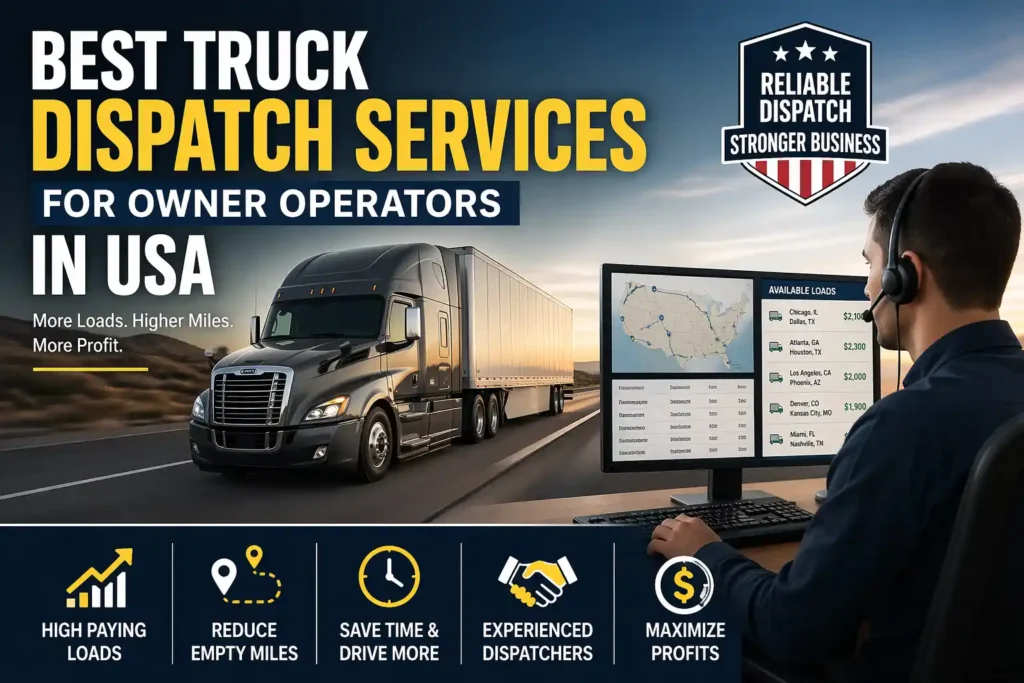
Best Truck Dispatch Services for Owner Operators in USA

What is a truck dispatch service?

A truck dispatch service is a support service that assists truck drivers and owner operators with locating freight loads and securing them. Tasked with searching, negotiating, and making bookings, dispatchers are no longer using hours in load boards.

They have a straightforward occupation:


    • Find available loads

    • Contact brokers

    • Negotiate rates

    • Freight by truck your books.

    • Handle basic paperwork

Simply put, they are intermediated, drivers and freight brokers.

Why owner operators need dispatch services

A lot of owner operators begin by thinking that they can do it all on their own. However, in the long run, the majority of them realize that it is a full-time job to find regular loads.

This is the actual use of dispatch services:

Saves time

You do not need to search loads all day, but instead you will be able to focus on driving and deliveries.

Better load access

Direct broker connections are often not available publicly on load boards and can only be provided by dispatchers.

Higher earning potential

An experienced dispatcher will think of how to get better freight rates.

Reduced empty miles

Fractionate dispatching makes you get backloads and limits deadhead movements.

Consistent work

Rather than random loads, you have more stable weekly routes.

What makes a good dispatch service?

Dispatch services are not all alike. Some are professional, seasoned, and others are mere novice load finders.

In a good dispatch service, we should find:


    • Strong broker network

    • Freight experience in various kinds.

    • Clear communication

    • Transparent pricing

    • Skill in locating well-paying loads.

    • Fixed assistance for your type of truck.

When a dispatcher cannot regularly supply loads, then what is the point?

Types of dispatch services for owner operators

This is because various trucks demand varying forms of dispatch support.

Box truck dispatching services.

Purposely used in Amazon relay and local freight, focused on local and regional delivery loads.

Flatbed dispatch services

Specializes in heavy and oversized freight like construction materials and equipment.

Hotshot dispatch services.

Pickup trucks with trailers are used to load fast delivery loads, which may be time-sensitive freight.

Reefer dispatch services

During the transportation of products under a certain temperature (food and pharmaceuticals).

Dry van dispatch service.

One of the most prevalent ones is transporting general freight interstate.

How dispatch services help increase profits

A good dispatching service is not one that simply locates loads. It has a direct effect on your income.

They help by:


    • Finding higher-paying lanes

    • Avoiding low-rate brokers

    • Planning efficient routes

    • Reducing fuel waste

    • Booking backhaul loads

A single percent change in rate per mile can result in a huge rise in monthly earnings.

Common mistakes owner operators make

Too many drivers can not work not due to the absence of work, but due to the miscalculations:


    • Taking low loads too readily.

    • Collaborations with inexperienced dispatchers.

    • Using a single source of load.

    • Failure to plan the return trips.

    • Not considering fuel and route efficiency.

These are some of the mistakes that should be avoided to contribute significantly to profitability.

How to choose the best truck dispatch service in USA

Check: Before working with any dispatch company, examine:

Experience

The length of time that they have been in the trucking industry.

Load network

The existence of strong relationships with brokers and shippers.

Transparency

Proper definition of fees and commission system.

Communication

Quick reaction and adequate movement updates on loads.

Results

Potential to supply regular and lucrative loads.

Conclusion

A good dispatch service is more than a support tool to owner operators in the USA: it can be a business partner. It not only curbs downtime but also improves the quality of loads and overall profits.

The thing, though, is selecting the appropriate dispatcher. One feeble service will cost you time, and a good one will always get your truck going and make you a profit.

Assuming that you want consistent traffic and improved revenues, then one of the most efficient dosses that you can take in the trucking sector is to engage a solid dispatch service.