Hotshot trucking is one of the fastest-growing segments of the transportation industry, offering owner-operators the flexibility to haul time-sensitive freight with heavy-duty pickup trucks and trailers. While the business can be rewarding, it also comes with unique safety challenges. Unlike traditional semi-trucks, hotshot rigs often transport a wide variety of cargo, travel long distances, and operate under tight delivery schedules.
Prioritizing safety is essential not only for protecting yourself and others on the road but also for maintaining your reputation and avoiding costly accidents, equipment damage, or downtime. Safe driving habits and proper equipment maintenance can help you deliver freight on time while keeping your business profitable.
In this guide, we’ll cover the most important hotshot trucking safety tips every driver should follow.
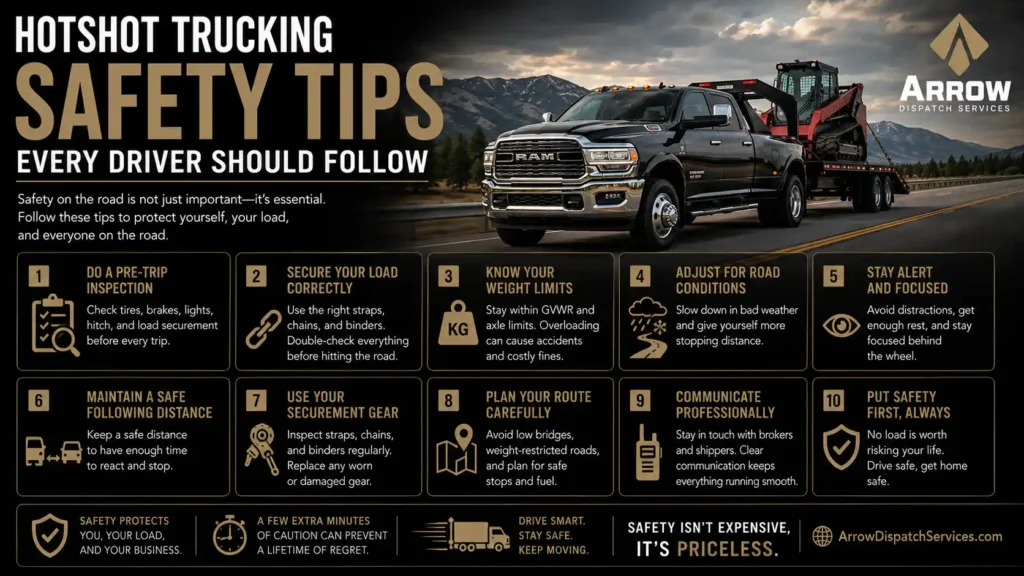
Perform a Pre-Trip Inspection Every Time
A thorough pre-trip inspection is one of the simplest ways to prevent breakdowns and accidents.
Before every trip, inspect your:
- Tires for wear and proper inflation
- Trailer hitch and coupler
- Safety chains
- Brake lights and turn signals
- Trailer brakes
- Wheel lug nuts
- Suspension components
- Mirrors
- Fluid levels
- Load securement equipment
Finding a small problem before you leave can prevent a major issue on the highway.
Secure Every Load Properly
Improperly secured cargo is one of the leading causes of trucking accidents.
Always make sure your freight is secured according to federal cargo securement regulations.
Use quality:
- Ratchet straps
- Chains
- Binders
- Edge protectors
- Tarps when required
After driving the first few miles, stop and recheck your straps or chains. Loads can shift during transport, especially on rough roads.
Never Exceed Weight Limits
Overloading your truck or trailer increases the risk of:
- Tire blowouts
- Brake failure
- Suspension damage
- Poor handling
- Longer stopping distances
Know your truck’s Gross Vehicle Weight Rating (GVWR), Gross Combined Weight Rating (GCWR), and axle weight limits before accepting any load.
Staying within legal weight limits also helps you avoid expensive fines and roadside violations.
Keep a Safe Following Distance
Hotshot trucks pulling trailers require more distance to stop than passenger vehicles.
Maintain plenty of space between your truck and the vehicle ahead, especially:
- During rain
- In heavy traffic
- On downhill grades
- At highway speeds
Leaving extra space gives you more time to react to sudden stops or road hazards.
Avoid Distracted Driving
Distractions behind the wheel can quickly lead to serious accidents.
Avoid:
- Texting while driving
- Holding your phone
- Eating while driving
- Programming GPS while moving
- Looking away from the road for extended periods
If you need to answer a call or update your route, pull over in a safe location first.
Drive According to Weather Conditions
Weather can change quickly, especially during long interstate trips.
Reduce your speed during:
- Heavy rain
- Snow
- Ice
- Fog
- High winds
Increase your following distance and avoid sudden steering or braking. If weather conditions become dangerous, it’s better to stop and wait than risk an accident.
Stay Within Speed Limits
Speeding may save a few minutes, but it significantly increases the risk of accidents.
Driving at a safe, consistent speed helps:
- Improve fuel efficiency
- Reduce tire wear
- Lower maintenance costs
- Increase vehicle control
- Protect your cargo
Always adjust your speed based on traffic and road conditions, not just the posted speed limit.
Manage Driver Fatigue
Fatigue affects reaction time, decision-making, and overall driving performance.
To stay alert:
- Get enough sleep before trips
- Take regular breaks
- Stay hydrated
- Eat balanced meals
- Avoid driving when overly tired
Ignoring fatigue can be just as dangerous as driving under the influence.
Maintain Your Truck Regularly
Preventive maintenance reduces unexpected breakdowns and improves safety.
Create a maintenance schedule for:
- Oil changes
- Brake inspections
- Tire rotations
- Suspension checks
- Transmission service
- Cooling system maintenance
- Battery inspections
A well-maintained truck is more reliable and less likely to experience mechanical failures on the road.
Inspect Your Trailer Frequently
Your trailer works just as hard as your truck.
Check:
- Wheel bearings
- Tires
- Brake systems
- Wiring
- Lights
- Couplers
- Safety chains
- Deck condition
Routine trailer inspections help prevent accidents and reduce costly repairs.
Plan Your Route Before Leaving
Good route planning improves both safety and efficiency.
Before starting your trip:
- Review weather forecasts
- Check road closures
- Identify fuel stops
- Locate rest areas
- Verify delivery locations
Planning ahead reduces stress and helps avoid last-minute decisions while driving.
Carry Emergency Equipment
Every hotshot truck should have basic emergency supplies.
Recommended items include:
- Fire extinguisher
- Reflective warning triangles
- Flashlight
- First aid kit
- Extra straps
- Basic tool kit
- Tire pressure gauge
- Portable air compressor
- Jumper cables
Being prepared allows you to handle unexpected situations safely.
Follow FMCSA Safety Regulations
Even small trucking businesses are responsible for complying with applicable federal safety regulations.
Stay current with requirements related to:
- Hours of Service (HOS)
- Vehicle inspections
- Cargo securement
- Driver qualifications
- Maintenance records
Compliance helps avoid penalties while improving safety and professionalism.
Work With Reliable Dispatch Services
A professional dispatch service can contribute to safer operations by reducing unnecessary stress.
An experienced dispatcher can help:
- Schedule realistic delivery times
- Plan efficient routes
- Minimize empty miles
- Coordinate appointments
- Reduce last-minute changes
Better planning allows drivers to focus on safe driving instead of rushing to meet unrealistic deadlines.
Build Safe Driving Habits Every Day
Safety isn’t just about following regulations—it’s about building consistent habits.
Successful hotshot drivers:
- Stay patient in traffic
- Avoid aggressive driving
- Perform daily inspections
- Keep accurate maintenance records
- Continue learning from experience
Small daily habits can significantly reduce risks over time.
Conclusion
Safety should always be the foundation of every successful hotshot trucking business. From performing thorough pre-trip inspections and securing every load to managing fatigue and maintaining your equipment, every precaution you take helps protect your business, your cargo, and everyone on the road.
While meeting delivery deadlines is important, arriving safely is even more valuable. By following these hotshot trucking safety tips and staying committed to safe driving practices, owner-operators can reduce accidents, avoid costly downtime, and build a reputation for reliability. In the long run, safe drivers are often the most successful drivers.
In the case of owner operators in the USA, it is more difficult to find steady and well-compensated loads than the actual driving of the truck. The competition is intense, the brokers are quick, and any good freight will hardly have a lengthy shelf life. Here is where dispatch services are involved. An experienced dispatcher could save some money, lessen dead air miles and enable you to drive more rather than drive all day trying to locate loads.
This guide defines exactly what truck dispatch services are, why they are important to owner operators and how to select the one that fits best in your trucking industry.
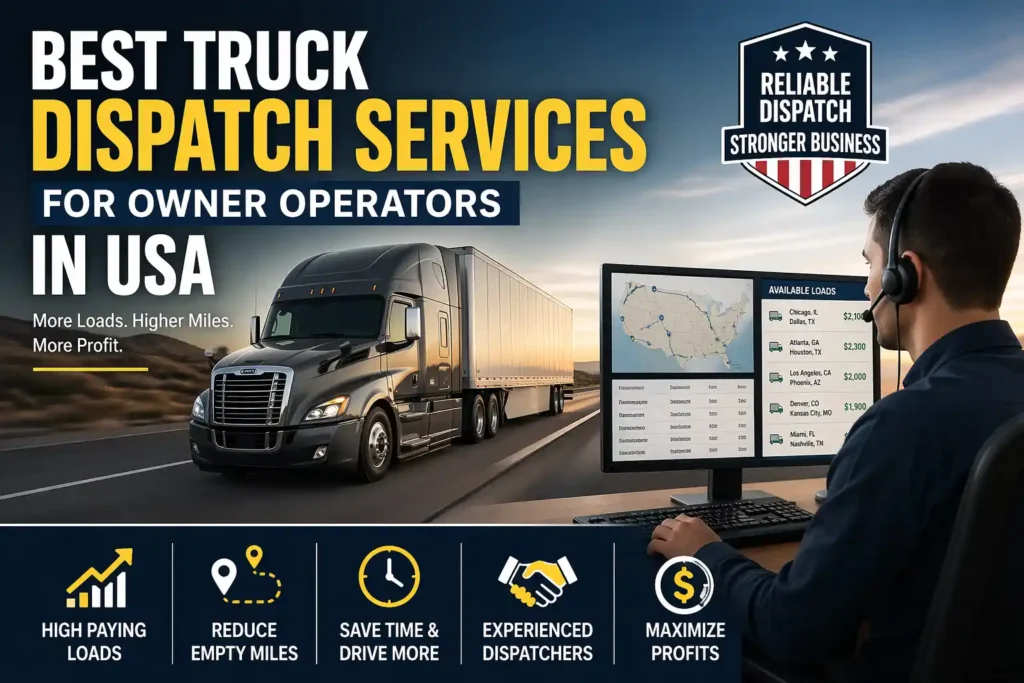
What is a truck dispatch service?
A truck dispatch service is a support service that assists truck drivers and owner operators with locating freight loads and securing them. Tasked with searching, negotiating, and making bookings, dispatchers are no longer using hours in load boards.
They have a straightforward occupation:
-
- Find available loads
-
- Contact brokers
-
- Negotiate rates
-
- Freight by truck your books.
-
- Handle basic paperwork
Simply put, they are intermediated, drivers and freight brokers.
Why owner operators need dispatch services
A lot of owner operators begin by thinking that they can do it all on their own. However, in the long run, the majority of them realize that it is a full-time job to find regular loads.
This is the actual use of dispatch services:
Saves time
You do not need to search loads all day, but instead you will be able to focus on driving and deliveries.
Better load access
Direct broker connections are often not available publicly on load boards and can only be provided by dispatchers.
Higher earning potential
An experienced dispatcher will think of how to get better freight rates.
Reduced empty miles
Fractionate dispatching makes you get backloads and limits deadhead movements.
Consistent work
Rather than random loads, you have more stable weekly routes.
What makes a good dispatch service?
Dispatch services are not all alike. Some are professional, seasoned, and others are mere novice load finders.
In a good dispatch service, we should find:
-
- Strong broker network
-
- Freight experience in various kinds.
-
- Clear communication
-
- Transparent pricing
-
- Skill in locating well-paying loads.
-
- Fixed assistance for your type of truck.
When a dispatcher cannot regularly supply loads, then what is the point?
Types of dispatch services for owner operators
This is because various trucks demand varying forms of dispatch support.
Box truck dispatching services.
Purposely used in Amazon relay and local freight, focused on local and regional delivery loads.
Flatbed dispatch services
Specializes in heavy and oversized freight like construction materials and equipment.
Hotshot dispatch services.
Pickup trucks with trailers are used to load fast delivery loads, which may be time-sensitive freight.
Reefer dispatch services
During the transportation of products under a certain temperature (food and pharmaceuticals).
Dry van dispatch service.
One of the most prevalent ones is transporting general freight interstate.
How dispatch services help increase profits
A good dispatching service is not one that simply locates loads. It has a direct effect on your income.
They help by:
-
- Finding higher-paying lanes
-
- Avoiding low-rate brokers
-
- Planning efficient routes
-
- Reducing fuel waste
-
- Booking backhaul loads
A single percent change in rate per mile can result in a huge rise in monthly earnings.
Common mistakes owner operators make
Too many drivers can not work not due to the absence of work, but due to the miscalculations:
-
- Taking low loads too readily.
-
- Collaborations with inexperienced dispatchers.
-
- Using a single source of load.
-
- Failure to plan the return trips.
-
- Not considering fuel and route efficiency.
These are some of the mistakes that should be avoided to contribute significantly to profitability.
How to choose the best truck dispatch service in USA
Check: Before working with any dispatch company, examine:
Experience
The length of time that they have been in the trucking industry.
Load network
The existence of strong relationships with brokers and shippers.
Transparency
Proper definition of fees and commission system.
Communication
Quick reaction and adequate movement updates on loads.
Results
Potential to supply regular and lucrative loads.
Conclusion
A good dispatch service is more than a support tool to owner operators in the USA: it can be a business partner. It not only curbs downtime but also improves the quality of loads and overall profits.
The thing, though, is selecting the appropriate dispatcher. One feeble service will cost you time, and a good one will always get your truck going and make you a profit.
Assuming that you want consistent traffic and improved revenues, then one of the most efficient dosses that you can take in the trucking sector is to engage a solid dispatch service.