MCS-150 Form: Complete Guide to Motor Carrier Identification Report & Biennial Update
A trucking business comes with many rules, and the ability to operate in compliance is the key to running the business without various obstacles. The MCS-150 form, also referred to as the Motor Carrier Identification Report is one of the most important compliance forms that any motor carrier should keep. Whether you work as an owner- operator or head a small group of carriers under your belt, then you need to be familiar with the MCS-150 form, how to file it and update it after every two years to ensure that your business operations are within the confines of the FMCSA set of regulations.
What is an MCS-150 Form?
The MCS-150 form is a document, which is required by the Federal Motor Carrier Safety Administration (FMCSA). It is a government document of all motor carrier pursuits that operating commercially in the United States. The data offered in this format assists FMCSA to monitor safety compliance, operational authority and fleet size.
The main components in the form were:
- USDOT Number: A special number of your carrier business.
- Carrier Name and Address: Legal and mailing business address.
- Operation Type: It refers to whether the carrier is interstate or intrastate.
- Vehicle Count and Type: How many and what type of trucks or commercial motor vehicles (CMVs) do you have in your fleet.
- Mileage: All vehicles combined total miles covered within one year.
- Compliance Data Safety: Violation, inspection, or any safety incident reported.
When properly filling the MCS-150, you will make sure that your carrier is registered and recognized by the FMCSA so that you do not have to pay fines, penalties and disrupt operational activities.
Why the MCS-150 Biennial Update Matter?
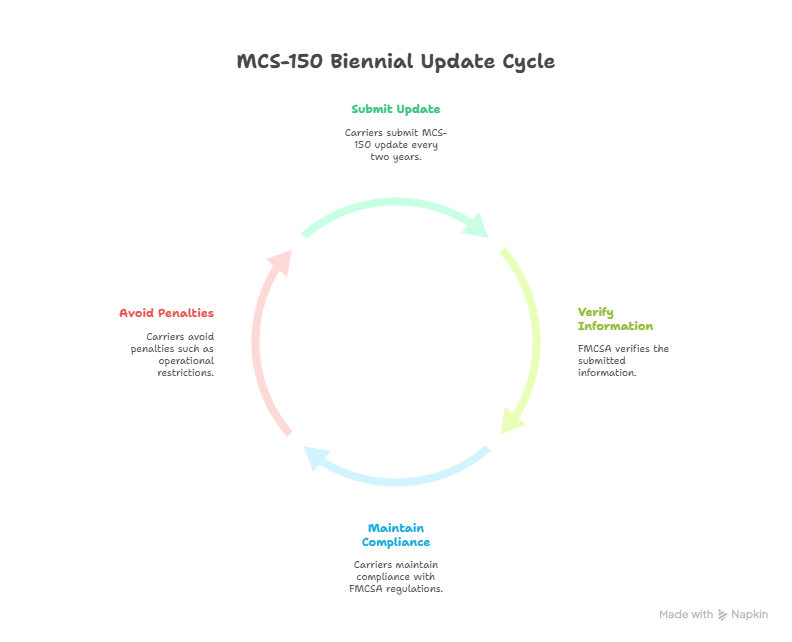
FMCSA requires all carriers to submit an MCS-150 biennial update, after every two years. Although there are no changes in your fleet or operations, carriers are required to provide an update in order to make sure that their information is up to date.
Lack of filing this update can cause serious problems:
- FMCSA can indicate your USDOT number as being inactive which restricts your legal operation.
- Coverage may be refused by the insurance companies in case of outdated registration.
- Your operational authority may be questioned, and this leads to delays in getting loads or contracts.
Through the biennial update, the carriers would be in compliance, retain control and protect their business concerning regulatory matters.
Who Needs to File an MCS-150?
It is required to file the MCS-150 by almost every motor carrier, which includes:
- Owner-Operators: Driver that owns and drives one truck, and operates under their own permission.
- Small Fleet Owners: This is a company that owns 2 or 10 trucks and should have the right FMCSA records.
- New Trucking Companies: New businesses that have been recently assigned operating authority but are in need of registration with FMCSA.
- Carriers Not Under Specific Dispatch: In spite of the fact that you delegate operations or cooperate with brokers, you are obliged to file the MCS-150.
It is imprtant to submit MCS-150 on time in case you are transporting freight across the state borders or provide regional delivery services.
Step-by-Step Guide to Completing MCS-150 Online
The MCS-150 is not difficult to fileif you follow the correct steps. Here’s a step-by-step guide:
Step 1: Create an FMCSA Portal Account
Carriers are required to open an account on the FMCSA Portal before filing online. This is a safe site where your details are received in the right manner and are stored securely.
Step 2: complete MCS-150 Fields.
It’s important to be accurate. Required fields include:
- Carrier Number and Name
- Address and Name of Legal Business.
- USDOT Number
- Type of operation Intrastate or interstate.
- Number of Vehicles: Count all of the trucks/trailers.
- Annual Mileage:Total miles covered by all vehicles in the fleet.
Step 3: Review Safety and Authority Information
Add information regarding any dangerous substances, compliance with controlled substances and accidents. This data is used by FMCSA to track compliance in the operations and label safety ratings.
Step 4: Submit the Form
Once all the information is checked, provide the form using the FMCSA portal. You will be notified when the submission is made and you need to keep this as a record.
Step 5: Schedule the Biennial Update
Keep your calendar to be updated the next time. Filing early helps avoid penalties and ensures your operating authority stays active.
Common Mistakes to Avoid When Filing
Even more experienced carriers are able to make mistakes. Avoid these common mistakes:
- Failure to meet Deadlines: It is always important to submit before the biennial deadline to ensure that USDOT number is in the active status.
- Mis-Reporting of Mileage: Reporting more or less than the actual miles will create audit.
- Misreporting Fleet Size: Vehicles included must be all of them including leased or rented ones.
- Misreporting Fleet Size: Vehicles included must be all of them including leased or rented ones.
- Improper Safety Records:Make sure any inspection or violation is properly recorded.
The focus on details helps to avoid penalties given by FMCSA and protects your business.
Advanced Tips to Simplify Compliance
Leverage Dispatch Services
The updates can be tracked, the fleet activities are managed, and the timely filing of MCS-150 can be achieved through the assistance of professional dispatch services. This is especially helpful, particularly for carriers that transport in more than one state or have a huge fleet.
Partner with Brokers
Working with freight brokers helps your business run smoothly because most of them would demand verified USDOT numbers and updated MCS-150 forms before contracts are awarded.
Use Technology Tools
MCS-150 filing reminders, mileage tracking, and accurate carrier data may be automated by means of platform such as DAT Copilot™.
Resources & Tools for Trucking Businesses
- FMCSA Portal: https://fmcsa.dot.gov MCS-150 submission official platform.
- New Trucking Companies Guides – New Trucking Company filing, operations, and compliance.
- Dispatch Services– Services that are outsourced to monitor updates, safety compliance, and mileage reporting.
Guaranteeing Compliance and securing Your Business.
Keeping an accurate MCS-150 is more than just paperwork, it is a foundation of carrier operations. By staying compliant:
- Your motor carrier authority is still in operation.
- You decrease exposure of risk in audits.
- You make sure that your fleet is able to operate under the legal level.
Each would be important in keeping your business running smoothly, whether you are a single truck owner operating as an owner-operator or are a small fleet owner with a range of carriers, timely updates, proper mileage reporting, and safety compliance information are required.
How Arrow Dispatch Services Can Help?
Make sure that you have the right filings of MCS-150. Your biennial updates, fleet mileage, and ensuring that your operations comply with FMCSA rules can be performed by professional dispatch services. Arrow Dispatch Services right now in order to secure your business, retain control, and make compliance easier.
Faqs
The MCS-150 form is used to register your trucking business with FMCSA and provide information about your fleet, operations, and safety compliance.
You need to file or update your MCS-150 every two years as part of the biennial update.
Yes, you can update it easily through the FMCSA Portal.
You can request a copy online through your FMCSA Portal account or contact FMCSA directly.
Yes, mailing is allowed, but online filing is faster and safer.
FMCSA usually sends reminders before your biennial update is due. You can also check your FMCSA Portal account.
No, updating the MCS-150 is free of charge.
Yes, all CDL holders must register with the FMCSA Clearinghouse for controlled substance and alcohol program compliance.
150 air miles are approximately 150 miles by road, though actual driving distance may vary depending on routes.
Yes, accurate MCS-150 information helps insurers assess your fleet risk, which can affect insurance premiums.